Table of Contents
- What Are Grass Alternatives (and Why Texas and Florida Homeowners Are Making the Switch)
- The Top Grass Alternatives for Texas and Florida Yards
- Head-to-Head: How Every Grass Alternative Stacks Up
- Grass Alternatives Cost Breakdown and Long-Term ROI
- How to Choose the Right Grass Alternative for Your Yard
- Grass Alternative Design Ideas and Inspiration
- Grass Alternative Pitfalls and Pro Tips
- Frequently Asked Questions About Grass Alternatives
- Get a Free Consultation From Magnolia Turf
- Related Resources and Internal Links
- References, Standards, and Additional Reading
What Are Grass Alternatives (and Why Texas and Florida Homeowners Are Making the Switch)
Quick Answer: Grass alternatives include artificial turf, clover, creeping thyme, gravel, mulch, and native ground covers. Artificial turf eliminates watering and mowing entirely; clover and native covers cut water use by 50–70%; and hardscape options like gravel need zero irrigation. The right pick depends on your traffic level, pet situation, budget, and HOA.
Texas homeowners spend an average of $1,890 per year maintaining 1,000 square feet of natural grass. That covers irrigation, fertilizer, chemicals, mowing, and repairs. In a state where summer temperatures regularly top 100 degrees and water restrictions tighten every year, that number keeps climbing.
More homeowners are looking for grass alternatives, and for good reason. The category includes living ground covers like creeping thyme and clover, hardscape materials like gravel and decomposed granite, organic and rubber mulch, native plantings, and artificial turf.
Each option solves a different problem. Some cut water bills, some eliminate mowing, and some hold up under dogs and kids.
This guide compares every grass alternative side by side, with per-square-foot pricing, long-term cost of ownership, heat performance, pet and child safety, and a decision framework built for Texas and Florida climates. We’ve installed over 10,000 artificial turf projects across both states, so we’ve handled every yard condition, soil type, and HOA situation you can think of. We know firsthand what works, what doesn’t, and what homeowners wish they’d known before choosing.
Get a closer look at how we install artificial turf from start to finish.
The Top Grass Alternatives for Texas and Florida Yards
Artificial Turf
Artificial turf eliminates watering, mowing, and chemical treatments entirely. A high-quality installation saves roughly 55,000 gallons of water per year for every 1,000 square feet, so your water bill drops to near-zero from day one. It’s usable immediately after installation and lasts 15 to 20 years with proper base work.
Premium turf products use W-, S-, and C-shaped blade technology that resists matting and holds its shape under heavy foot traffic, pets, and direct sun, so your yard looks full and upright for years instead of flat and worn. LusterGuard coating adds a matte finish that neighbors and HOAs can’t tell from natural grass.
The catch: Turf gets hot in direct sun. Surface temperatures can run 40 to 60 degrees above natural grass on peak summer afternoons.
Cooling infill technologies like zeolite and organic blends (coconut husk, cork) reduce surface heat by 30 to 50 degrees, making the turf comfortable for bare feet even on hot afternoons. A quick rinse with a hose cools the surface immediately.
For pets, turf with flow-through backing technology drains at 900-plus inches per hour, flushing urine instantly so odor never builds up. Microban antimicrobial coating prevents bacteria from taking hold, keeping your pet area sanitary between cleanings.
Modern turf fibers are made from non-toxic polyethylene or polypropylene, and PFAS-free products are now standard from reputable manufacturers, so your pets and kids can roll around on the surface without chemical exposure.
For kids, turf paired with ASTM-certified foam underlayment cushions falls from five to 10 feet, giving you playground-grade safety right in your backyard. It produces zero pollen and eliminates the need for pesticides and herbicides, so your kids play on a cleaner surface than natural grass.
Read our full guide on artificial turf care and maintenance to see what upkeep looks like long-term.
Creeping Thyme
Creeping thyme is a low-growing herb that tolerates drought and thin soils well in USDA Zones 8 through 10, which covers all of Texas and Florida. It requires no fertilizer, minimal irrigation, and almost no mowing, so your weekend yard work drops to nearly nothing. Established thyme lawns can persist 10-plus years with good drainage.
Installation runs $3 to $7 per square foot using plugs spaced six to 12 inches apart. Annual upkeep stays under $100 to $150 per 1,000 square feet.
The downsides: Thyme takes one to two growing seasons to fill in completely. It can’t handle heavy foot traffic from dogs or active play areas. Repeated dog routes wear channels that expose bare soil.
The abundant flowers attract pollinators, which may concern families with bee-sting allergies.
Clover Lawns
White clover is one of the least expensive grass alternatives to install, costing $1 to $3 per square foot. It fixes nitrogen from the air, reducing fertilizer needs by 60 to 70%, which means you skip most fertilizer schedules and the cost that comes with them. One documented case study showed irrigation dropping from 1,200 gallons per week on natural grass to 450 gallons per week after conversion to clover.
Clover reaches usable coverage in eight to 12 weeks and full density within one growing season. It tolerates moderate traffic well and recovers from compaction. Annual maintenance runs $175 to $300 versus $850 to $1,450 for traditional grass on comparable areas.
The trade-off: Clover flowers attract bees (good for the environment, potentially concerning for families with allergies). Chronic dog-marking zones thin out and need reseeding. Clover lawns provide a soft surface for ground-level play but don’t meet formal fall-height safety ratings for playground equipment.
Gravel and Decomposed Granite
Decomposed granite (DG) and ornamental gravel cost $1.50 to $4 per square foot installed. They require zero irrigation, hold up well structurally, and can last 10 to 20-plus years before replenishment, so you install once and don’t think about it for a decade or more.
DG works immediately after compaction. It drains well and looks intentional in xeriscape designs. Annual upkeep runs $50 to $150 per 1,000 square feet for raking, weed control, and spot top-offs.
The limitations are real. Light-colored DG can still reach 10 to 25 degrees above air temperature in full sun. Rough or angular stone is abrasive on bare feet and dog paws.
Dogs who dig disturb the surface easily. Large front-yard expanses of rock or gravel get rejected by many HOAs that require a “green” appearance from the street.
Mulch (Organic and Rubber)
Organic mulch (shredded hardwood, pine bark) costs $1.25 to $2.50 per square foot installed at a three-inch depth. Rubber mulch for play areas runs $3 to $7 per square foot. Both are usable immediately.
Organic mulch conserves soil moisture, moderates temperature, and reduces watering frequency around plantings. Rubber mulch provides impact absorption and can meet ASTM F1292 fall-height criteria in playground applications, giving your kids a cushioned landing under play equipment.
The downside: Organic mulch decomposes in one to three years and needs regular top-ups, running $100 to $300 annually. Wood chips scatter under dogs running at full speed.
Cocoa mulch is toxic to dogs. Rubber mulch can get hot in dark colors and may leach compounds, though this is localized to play areas.
Native Ground Covers
Texas and Florida extension programs promote species like frogfruit, horseherb, perennial peanut, and sunshine mimosa as grass alternatives. These native options often cost $2 to $5 per square foot using plugs or container plants. Annual maintenance runs $50 to $200.
Native ground covers require minimal irrigation once established, cutting water use by 50% or more compared to St. Augustine or Bermuda grass. They support local ecosystems and pollinators, bringing butterflies and beneficial insects to your yard. They stay much cooler than synthetic surfaces in full sun, so you can walk barefoot on them all summer.
Establishment takes six to 18 months depending on species, and seasonal appearance changes from month to month. Some species handle moderate traffic, but none match artificial turf’s durability for heavy-use areas.
Head-to-Head: How Every Grass Alternative Stacks Up
No other guide on this topic puts all grass alternatives into one honest comparison. Here’s how they perform across the factors Texas and Florida homeowners care about most.

Artificial turf is the only grass alternative that combines immediate usability, heavy-traffic durability, formal fall-height safety ratings (with proper pad), and zero irrigation. It runs hottest in direct sun, though, so cooling infill and shade planning matter for Texas summers.
Clover and native ground covers save water at a fraction of the upfront cost, though they need months to establish and can’t match turf’s durability under dogs and active kids.
Grass Alternatives Cost Breakdown and Long-Term ROI
Upfront cost tells half the story. Here’s what each grass alternative costs over 10 years for 1,000 square feet.
The comparison that matters most: Natural grass costs $21,900 to $23,900 over 10 years when you factor in water, fertilizer, pest control, mowing, and repairs. Every grass alternative on this list costs less over a decade.
Artificial turf has the highest upfront cost but the lowest ongoing maintenance. For homeowners who plan to stay long-term and want a yard that handles kids, pets, and Texas weather without ongoing effort, the math works out.
Clover and gravel deliver the lowest total cost of ownership for homeowners who don’t need heavy-traffic durability or year-round green appearance.
Yard size, soil conditions, and regional labor markets affect real-world pricing. A 500-square-foot project costs more per square foot than a 2,500-square-foot project across every option, since fixed mobilization and site prep costs get spread over less area.
For a deeper look at what drives artificial turf pricing, read our complete cost breakdown guide.
How to Choose the Right Grass Alternative for Your Yard
The right choice depends on how you use your yard, not which option costs the least. Start with these factors.
Traffic level. Heavy-use backyards with dogs and kids need artificial turf or clover at a minimum. Low-traffic front yards can handle thyme, native covers, or decorative gravel.
Pets. Dogs need durable, drainable surfaces. Artificial turf with flow-through backing handles the abuse and drains urine instantly. Clover holds up under moderate dog traffic. Gravel and mulch scatter under zoomies and hold odor.
Timeline. Artificial turf and gravel are usable within days. Clover needs two to three months. Thyme and native covers take six months to a year or more.
HOA requirements. Get written approval before replacing grass. Artificial turf acceptance is growing in Texas and Florida communities, especially in backyards and side yards. Clover and native covers get approved more easily when they look maintained. Large gravel expanses still face pushback in many deed-restricted neighborhoods.
Length of stay. For homeowners staying five-plus years, artificial turf’s higher upfront cost pays back through zero maintenance. Shorter timelines favor lower-cost grass alternatives like clover or DG.
Zone-by-Zone Recommendations
High-traffic backyard (kids, dogs, entertaining): Artificial turf with cooling infill and proper base work. It’s the only option that handles daily abuse and stays usable year-round without maintenance gaps.
Low-traffic front yard (curb appeal): Creeping thyme, native ground cover mosaics, or a blend of turf and ornamental borders. These options look great from the street without the heavy-duty specs a backyard demands.
Dog run or dedicated pet area: Artificial turf with flow-through backing, antimicrobial coating, and proper drainage. Urine flushes through on contact, bacteria can’t take hold, and the surface stays odor-free with a weekly rinse. No other grass alternative handles concentrated pet use as well.
Side yards and utility areas: Gravel, DG, or mulch. These spaces don’t need the aesthetics or durability of a main yard and benefit from the lowest-cost options.
Shade-heavy areas under trees: Native ground covers or mulch. Artificial turf works in partial shade but performs best in full sun. Living alternatives thrive in dappled light.
Learn more about how we design pet turf installations for dogs across Texas and Florida.
Grass Alternative Design Ideas and Inspiration
The best Texas yards don’t rely on a single grass alternative everywhere. They mix materials based on how each area gets used.
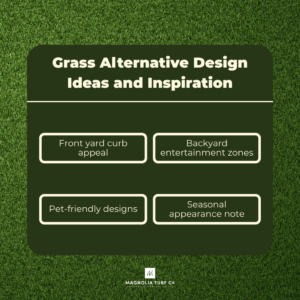
Front yard curb appeal: A clean expanse of artificial turf bordered by native plantings and decomposed granite pathways creates a manicured look that stays green through August without a drop of irrigation. Native flowering plants along the border bring color and texture without the maintenance of a traditional flower bed.
Backyard entertainment zones: Artificial turf for the main play and gathering area, transitioning to a DG patio or pathway near the grill or fire pit. Creeping thyme between pavers softens hardscape edges and releases fragrance when stepped on.
Pet-friendly designs: A dedicated turf dog run along the fence line (with proper drainage and antimicrobial coating) keeps the main yard clean and odor-free. Clover or native ground cover fills the remaining space at a fraction of the cost.
Seasonal appearance note: Artificial turf stays consistent year-round. Living grass alternatives change with the seasons.
Clover and thyme go dormant in winter in most Texas zones, leaving brown patches from December through February. Native covers differ by species. Plan for how the yard looks in January, not just July.
Grass Alternative Pitfalls and Pro Tips
Mistakes Homeowners Make
Skipping site prep. This is the number-one cause of failure across every grass alternative. Artificial turf needs three to four inches of compacted base material. Gravel needs proper grading and edge containment.
Clover and native covers need existing grass removed and soil amended before planting. It’s the step most installers cut to save money, and it’s the reason Magnolia Turf owner David Turner won’t skip it on a single project. That means your installation performs correctly from year one instead of failing in year two.
We’ve repaired enough failing installations to know where corners get cut.
Ignoring drainage. Houston’s clay soils and Florida’s rain events demand drainage planning. Flow-through turf backing drains 900 inches per hour, so you get zero standing water or puddles after a downpour.
That drainage fails if the sub-base isn’t graded correctly, though. DG and mulch wash out without proper edging and slope.
Choosing based on a neighbor’s experience in a different climate. That thyme lawn that thrives in Portland won’t perform the same in Dallas. Texas heat, humidity, and drought cycles put different demands on every grass alternative. Stick to species and products proven in USDA Zones 8 through 10.
Ignoring the sun. Artificial turf runs hot in direct afternoon sun between noon and 4 p.m. in summer. Plan shade structures, cooling infill, or schedule use around peak heat. DG gets warm but stays walkable, and living alternatives stay closer to ambient temperature.
Debunking Common Myths
“Artificial turf is too hot to use.” Cooling infill reduces surface temperatures by 30 to 50 degrees, bringing the turf into a comfortable range for bare feet. A 60-second rinse with a garden hose cools the surface immediately. Unlike concrete, turf doesn’t retain heat and cools quickly in shade.
“Gravel yards look cheap.” Properly designed DG landscapes with clear borders, mixed plantings, and intentional pathways look polished and contemporary. The key is design, not the material itself.
“Clover attracts too many bees.” Mowing clover before it flowers reduces bee activity. Many Texas homeowners mow every three to four weeks during bloom season and report minimal bee presence.
Read our full guide on artificial turf care and troubleshooting for more maintenance tips.
Frequently Asked Questions About Grass Alternatives
What grass alternative is best for dogs?
Artificial turf with flow-through backing and antimicrobial coating handles dogs better than any other option. It drains urine at 900-plus inches per hour, resists digging and scratching, and cleans with a simple rinse. Clover works for light dog traffic but thins under repeated use.
Which grass alternative saves the most water?
Artificial turf eliminates irrigation entirely, saving about 55,000 gallons per year for every 1,000 square feet. Clover saves 40,000 to 60,000 gallons annually compared to irrigated natural grass but still needs occasional watering during extreme drought.
Do HOAs allow grass alternatives in Texas?
More Texas and Florida HOAs are approving artificial turf, especially in backyards and side yards. Get written approval before starting any project. Submit product specifications, drainage plans, and photos of completed installations to improve your chances of approval.
How long does artificial turf last in Texas heat?
High-quality artificial turf with UV-stabilized fibers and proper base work lasts 15 to 20 years in Texas conditions. UV stabilizers prevent fading, so your turf looks as green in year 10 as it did on day one.
Nylon turf resists melting from intense window reflection (Low-E glass), which means no warped or damaged spots near your house. Three to four inches of compacted crushed granite or limestone underneath keeps the surface level and draining properly for the turf’s full lifespan.
Is artificial turf safe for kids?
When paired with ASTM-certified foam underlayment, artificial turf cushions falls from five to 10 feet, giving your backyard the same fall protection as a commercial playground. It produces no pollen (reducing allergy triggers), eliminates the need for pesticides and herbicides, and is PFAS-free from reputable manufacturers. It’s the only grass alternative on this list with formal fall-height safety certification.
What’s the most affordable grass alternative?
Clover lawns cost $1 to $3 per square foot to install and run $3,000 to $6,000 over 10 years, making them the lowest total-cost option. Gravel and DG are comparable at $2,000 to $5,500 over a decade. Both cost far less than maintaining natural grass.
Get a Free Cost Estimate From Magnolia Turf
If artificial turf is on your shortlist, we can help you figure out whether it’s the right grass alternative for your yard, family, and budget. We’ve installed over 10,000 projects across Texas and Florida, which means we’ve already solved the exact yard, soil, and drainage challenges you’re facing.
Magnolia Turf is owner-operated by David Turner, who built this company on a simple principle: Do it right, or don’t do it at all. You’ll work with the person who built the business and stands behind every install, not a rotating crew of subcontractors. That means every project gets proper base work, premium materials, and a 15-year warranty backed by an owner who stakes his reputation on the result.
Request a free estimate, and we’ll assess your space, answer your questions, and give you a transparent quote.
This guide is here for you whether you’re ready today or still comparing grass alternatives. Bookmark it, share it with your partner, and reach out when you’re ready to talk specifics.
Related Resources and Internal Links
- Artificial Grass Installation Costs: The Complete Guide to Investment, ROI, and What You Really Pay
- Artificial Turf Maintenance: Complete Care Guide
- Pet Turf and Artificial Grass for Dogs
- Artificial Grass Drainage
- Artificial Grass Infill Solutions
- Types of Artificial Turf: Which One Is Right for You?
- Turf vs. Grass: Complete Comparison for Texas and Florida Homeowners
- Artificial Grass in Dallas
- Artificial Grass in Houston
- Artificial Grass in Austin
- Artificial Grass in San Antonio
- Artificial Grass in Tampa
- Artificial Grass in Sarasota
References, Standards, and Additional Reading
- Texas A&M AgriLife Extension: Lawn Water Management
- Texas A&M AgriLife Extension: Conserving Water Through the Use of Mulch
- University of Florida IFAS: Groundcovers for an Alternative Lawn
- Texas Water Development Board: Water Conservation Guidelines
- Penn State Center for Sports Surface Research: Synthetic Turf Heat