Artificial Grass for Residential Lawns and Yards
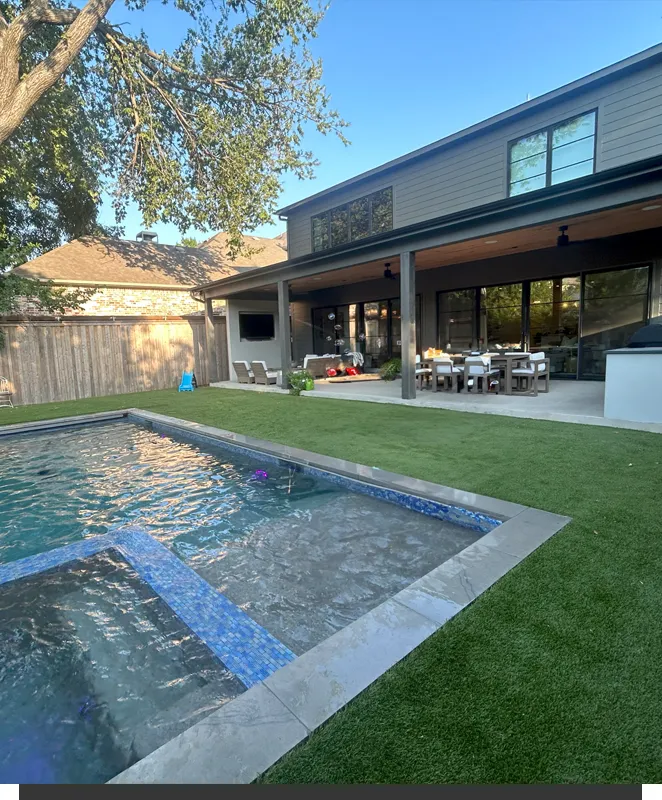
Artificial grass gives you a lawn that looks good every day of the year without the work. No mowing, no watering, no fertilizing, no fighting Texas heat or Florida humidity. Just a green yard that stays green whether it's July or January.
We've installed artificial turf at over 10,000 homes across Texas and Florida since 2009. Our residential landscape turf includes Microguard antimicrobial protection, Triflow Backing that drains at 900 inches per hour, and a 15-year warranty. These aren't upgrades. They're standard on every installation.
Most homeowners spend 100-150 hours per year maintaining natural grass. With artificial turf, that drops to 5-10 hours. The rest of your weekends are yours.
Get A Free EstimateBenefits of Landscaping With Artificial Grass
- Non-Toxic Artificial Grass
- Low Maintenance Landscaping
- Cost-Effective Lawn Solution
- Durability in All Conditions
- Ideal for Commercial and Residential Landscapes
- Hassle-Free Installation
Our landscape turf is 100% lead-free, PFAS-free, and non-toxic. Kids and pets can play on it safely, and you eliminate fertilizers, pesticides, and weed killers from your lawn entirely.
Natural grass demands 100 to 150 hours of maintenance per year. Artificial grass needs 5 to 10. No mowing, no edging, no fertilizing, no weed control, no irrigation upkeep.
The average Texas homeowner spends $150 to $300 per month on lawn care during peak season. Artificial grass stops the monthly drain, and most homeowners see full payback within 5 to 7 years.
Texas summers kill natural grass. Florida humidity breeds fungus. Shade creates bare spots. Our landscape turf handles all of it with UV-stabilized fibers, 900 in/hr drainage, and reinforced blades that bounce back from foot traffic.
We install for single-family homes, townhomes, apartment complexes, HOA common areas, and commercial properties. Works with any landscape design: pavers, stone borders, flower beds, and hardscape features.
Most residential installations take 1 to 3 days. We handle everything from removing existing grass to grading, base work, turf installation, and finishing edges. One crew, one timeline, one point of contact.

Superior Drainage
Our Triflow Backing drains at 900 inches per hour, 30 times faster than standard turf with hole-punched backing. We install a 3 to 4 inch compacted gravel sub-base under every project for additional drainage capacity. No pooling, no soggy spots, no waiting for the yard to dry before using it.

Antimicrobial Technology
Every installation includes Microguard antimicrobial protection built into the turf fibers, reducing bacteria growth by 99% for the entire life of the turf. In humid Texas and Florida climates, this prevents mold, mildew, and odor buildup at the fiber level. This isn't a spray-on treatment that wears off: the protection is integrated into manufacturing and lasts the full 15+ year lifespan.

Safer and Stronger Infill
Our turf uses reinforced W-shaped and C-shaped blade technology that bounces back after compression instead of laying flat. Standard silica sand infill is included with every installation, and for pet areas we can use zeolite infill that absorbs ammonia for better odor control. All backed by a 15-year warranty based on over a decade of real-world performance since 2009.

Superior Realism
Our landscape turf combines multiple shades of green with a brown thatch layer at the base, and the blades are delustered so they don't shine in the sun like cheap turf does. Different blade heights and textures create visual depth, and most visitors don't realize it's artificial until they notice it never needs mowing. We offer multiple turf styles from manicured lawn to more natural meadow-style appearance.
Satisfied Clients
Honest reviews from satisfied customers
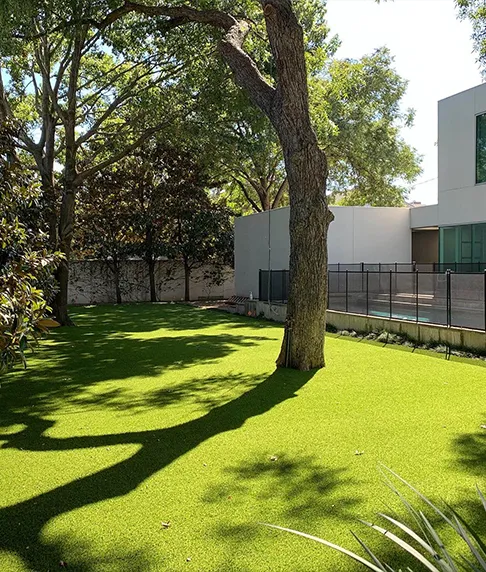

Fast. Amazing install. I still can’t believe they did such quality work in such a short amount of time. Trey was excellent to work with. We highly recommend Magnolia. We got another quote that was $1500 higher, but our neighbor used Magnolia and highly recommended them. So we got a quote and we are so glad we did. The best part is stepping on it for the first time. Immediately you can tell this is high quality. And the crew cleaned up everything when they were done. Not a speck of trash or dirt was left on our patio or in the front yard. And it is also beautiful. 10/10 would do it again!
Eddie R.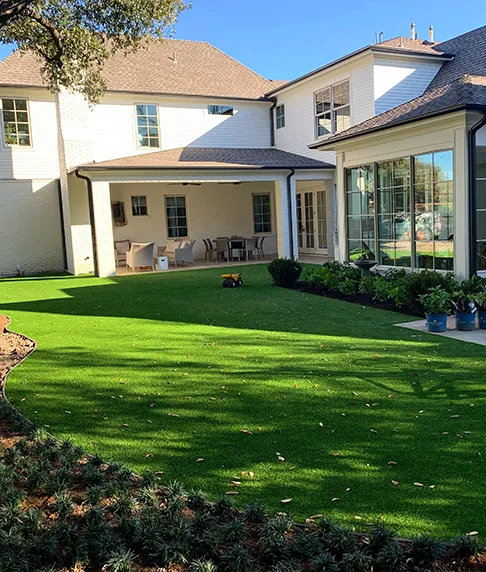
This was our third time using Magnolia Turf and as always the experience was great! Amazing customer service and communication. This was our biggest, most complicated install yet and they made it so easy for us. We had a sloped yard I was worried about, but the team was able to make it work. Always recommend Trey and team for turf installations.
Jack L.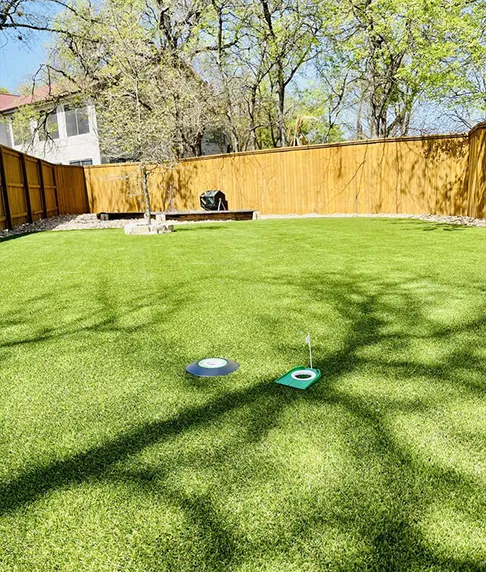
Brent is very professional and responsive. Came out with several samples to give a free estimate and walk through our options. He was helpful as we went back and forth a few times on some revisions of the estimate while changing exactly what we wanted. Then they were able to get us on the schedule a couple of weeks early, and in a day and a half turned our grotesque, obstacle course of a yard into a beautiful/useable/kid and dog friendly space. If you don't have turf you're missing out!
Brandon D.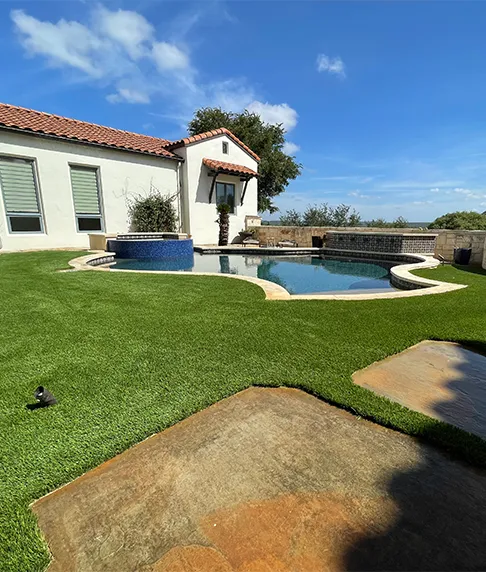
10/10 on all fronts. From quality turf, professionalism, timelines and the install process - everything was just as hoped. A huge shoutout to Weston for his help in making our vision become a reality. He really knew his stuff and talked through all the options with us. Ready to enjoy our new yard this fall!
Lauren K.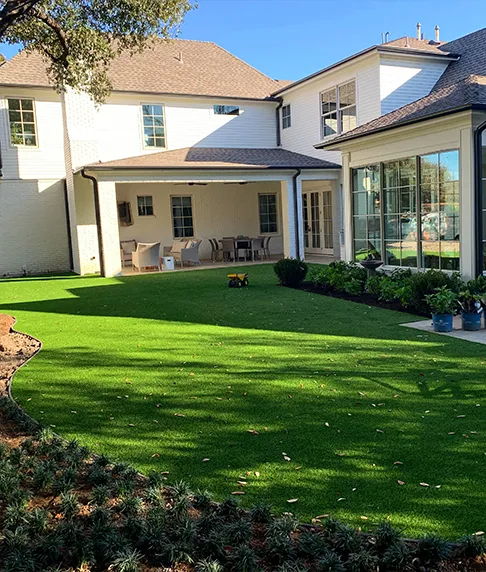
They completed the work in the time frame that they promised and at a cost that was better than the other bids I received. He followed up the entire process and answered all questions in a timely manner. Very happy with the work and def will def recommend them.
Tim E.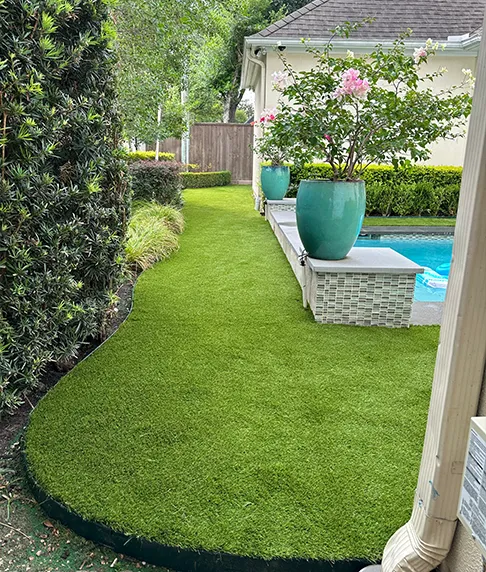
Extremely happy with the work Kevin & Magnolia Turf did for us! Received an incredibly competitive quote for what we were looking to do in our backyard and although we were told we’d have to wait until June for the install, their team was able to finish within 2 weeks of us moving forward. The crew was efficient and did a great job ensuring everything was level and installed properly. Really excited to have this installed before summer!!
Jessi C.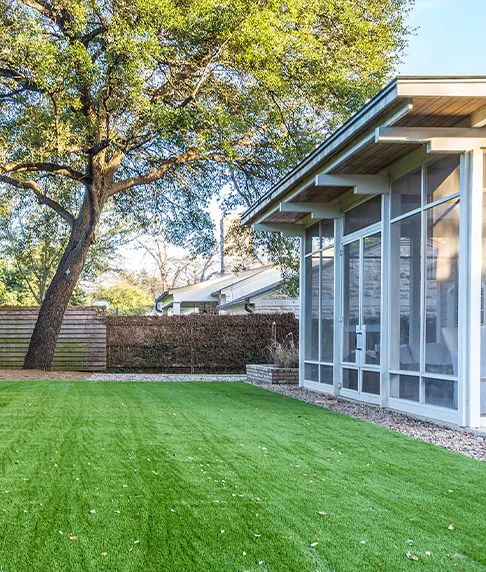
Fantastic experience with David and the team at Magnolia Turf! David promptly responded to my request for a quote and were able to meet me at a time that worked for me. His crew arrive right on time the first day of the project and David was right there with them to make sure that everything started off as it should. The installation crew could not have been kinder, more professional or have done a better job. My lawn looks absolutely amazing now and our dog like it more than my wife and I do!
Tom C.
Highly highly recommend Magnolia Turf company! I shopped around quite a bit for a artificial turf company to use and requested estimates. When I received Magnolia's quote I was a little skeptical as it was extremely affordable relative to the other offer I was seeing. After meeting with Lance to go over the project, all my concerns were put to rest and I was very confident my yard would be in good hands. Scheduling was easy, and the project took just a day to complete. I couldn't be happier with the end result. Everyone looks better then I anticipated. Again I would highly recommend this company as they have great product, great install, and all for a lower price then the other contractors out there!
Benjamin G.Gallery

Frequently Asked Questions
A 1,000 sq ft natural lawn in Texas uses 20,000-30,000 gallons of water per year for irrigation. Artificial grass uses zero. For a typical residential yard, that’s $600-1,200 per year in water savings.
In areas with water restrictions or drought conditions, artificial grass keeps your yard green without violating watering limits. Many Texas and Florida municipalities offer rebates for removing natural grass and installing water-efficient landscaping. Check with your local water authority for available programs.
Weekly: Remove leaves and debris with a leaf blower or rake. Takes 5-10 minutes for most yards.
Monthly: Brush high-traffic areas with a stiff broom or power broom to keep blades upright. Rinse with a garden hose if needed.
Annually: Do a deeper rinse of the entire yard. Check edges and seams for any lifting. Inspect infill levels in high-use areas.
Total time: 5-10 hours per year compared to 100-150 hours for natural grass. No mowing, no edging, no fertilizing, no weed control, no irrigation system maintenance.
Our landscape turf lasts 15-20 years with normal residential use. We provide a 15-year warranty on materials.
Lifespan depends on:
- Installation quality: Proper sub-base prevents settling and drainage issues
- Turf quality: Commercial-grade fibers with UV protection resist fading and wear
- Usage: Normal residential foot traffic is well within design limits
- Basic maintenance: Occasional brushing and rinsing extends appearance
Cheap turf from big box stores (typically $2-3/sq ft) lasts 5-8 years before fading and matting. Commercial-grade turf installed correctly maintains its appearance for 15+ years. The sub-base we install lasts indefinitely, so if turf ever needs replacement, the groundwork is already done.
Artificial grass has environmental tradeoffs. The benefits:
- Water savings: Zero irrigation saves 20,000-30,000 gallons per year per 1,000 sq ft
- No chemicals: Eliminates fertilizers, pesticides, and herbicides from your yard
- No emissions: No gas mower running weekly (average mower produces as much pollution as 11 cars)
The considerations:
- Artificial turf is a petroleum-based product
- It doesn’t support pollinators like flowering lawns can
- End-of-life disposal requires proper recycling
For most residential yards in Texas and Florida where natural grass struggles with heat, drought, and heavy irrigation demands, the water and chemical savings outweigh the manufacturing footprint. In cooler climates with ample rainfall, the calculation is different.
Yes. We regularly install turf on slopes, hills, and uneven terrain. The key is proper anchoring and drainage design.
For slopes, we:
- Secure turf edges with spikes and adhesive to prevent shifting
- Grade the sub-base to work with the natural slope for drainage
- Use additional anchoring at the top of slopes where gravity pulls hardest
- Sometimes install retaining features for steep grades
Slopes actually improve drainage since water naturally runs downhill. The challenge is keeping the turf and infill in place during heavy rain. With correct installation technique, sloped turf performs as well as flat installations.
We’ve done hillside yards, terraced landscapes, and properties with significant grade changes. During your estimate, we’ll assess the slope and explain exactly how we’ll handle it.
Artificial turf does get warmer than natural grass in direct sun. On a 100°F day, dark-colored turf can reach 140-160°F in full afternoon sun. This is comparable to concrete, asphalt, or a car hood in the same conditions.
Ways to manage heat:
- Lighter turf colors absorb less heat than dark greens
- Shade from trees, pergolas, or structures keeps areas cooler
- Water spray drops surface temperature 30-40°F within seconds
- Timing – mornings and evenings are comfortable even in peak summer
Most homeowners find they adjust naturally, avoiding barefoot walks across full-sun areas during afternoon heat, just as they would with a hot patio or driveway. Shaded areas and areas sprayed with water are comfortable throughout the day.
Low-quality turf looks fake. Quality turf doesn’t. The differences:
Cheap turf looks fake because:
- Single shade of bright green (real grass has variation)
- Shiny blades that reflect light like plastic
- Uniform blade height and direction
- No thatch layer at the base
Our turf looks real because:
- Multiple green shades with brown thatch layer
- Delustered blades that don’t shine in sunlight
- Varied blade heights and natural-looking texture
- Color variation that mimics real lawn appearance
We’ll show you samples during your estimate. You can see and feel the difference between commercial-grade turf and the cheap rolls sold at hardware stores. Most visitors to homes with our turf don’t realize it’s artificial until they’re told.
Professional artificial grass installation typically costs $7-11 per square foot, including materials and labor. A 1,500 sq ft front and back yard runs approximately $12,000-22,500.
Price factors include:
- Yard size: Larger projects have lower per-sq-ft costs
- Site conditions: Flat, accessible yards cost less than sloped or complex sites
- Turf quality: Commercial-grade with antimicrobial coating vs. basic turf
- Current landscaping: Removal and prep work varies by yard
We provide detailed quotes with line-item pricing. During your free estimate, we assess your specific yard and give you exact numbers, not ranges. See our Cost page for detailed pricing information and ROI calculations.
Our turf drains at 900 inches per hour through Flow-Through Backing. A 3-4 inch gravel sub-base provides additional drainage capacity underneath. This system handles Texas thunderstorms and Florida afternoon deluges without pooling.
For comparison: heavy rain is defined as 0.3 inches per hour. Our turf drains 3,000 times faster than heavy rainfall. Even during flash flood conditions, water moves through the turf and into the ground immediately.
If your yard has existing drainage problems (standing water, soggy areas), we address those during installation. Proper grading and sub-base work can solve drainage issues that have plagued natural lawns for years. The turf installation becomes an opportunity to fix underlying problems, not just cover them up.
DIY installation is possible but not recommended for most homeowners. The turf itself is the easy part. The sub-base work is where DIY installations fail.
Professional installation includes:
- Proper excavation depth (3-4 inches for sub-base)
- Correct gravel type and compaction
- Grading for drainage slope
- Professional seaming that won’t separate
- Edge securing that stays put
- Warranty coverage
DIY installations commonly fail because homeowners skip or skimp on the sub-base to save money. The result is turf that settles unevenly, drains poorly, and develops bumps and dips within 1-2 years. Fixing a failed DIY installation costs more than professional installation would have originally.
If you have construction experience and access to proper equipment (plate compactor, power broom), DIY is possible. For most homeowners, professional installation protects the investment.