Artificial grass maintenance takes about five to 10 hours per year. Compare that to the 100 to 150 hours you’ll need to spend mowing, watering, and fertilizing natural grass in Texas or Florida. A monthly brush, an occasional rinse, and basic cleanup keep your turf looking new for 15 to 20 years.
Brush high-traffic areas monthly, rinse with a hose as needed, and pick up debris with a leaf blower. If you have pets, rinse their favorite spots two to three times a week. Most homeowners spend less than an hour per month on artificial turf lawn care.
Your low-maintenance yard starts here. Get a free estimate today.
How Often Does Artificial Grass Maintenance Take?
Most yards need artificial grass maintenance once or twice a month. Light-use decorative yards might go six to eight weeks between brushings. Yards with kids and dogs need weekly spot cleaning and monthly brushing. High-traffic pet areas benefit from rinsing two to three times per week.
We’ve installed over 10,000 yards across Texas and Florida, so we’ve seen what works and what doesn’t. The homeowners who stick to a basic monthly maintenance routine get the longest life out of their turf.
Artificial Grass Maintenance vs. Natural Grass Maintenance

What Tools Do You Need for Artificial Grass Maintenance?
Artificial grass maintenance doesn’t require much. A stiff-bristled broom or turf brush keeps blades upright. A leaf blower clears leaves, twigs, and dust.
A garden hose rinses away dirt, pollen, and pet residue. Mild dish soap handles most stains. An enzyme-based turf cleaner (like PE-51) works for pet odor control.
Skip metal rakes, wire brushes, and harsh chemicals like bleach or ammonia. These damage turf fibers and void warranties. If someone tells you to use bleach on your turf, find a different advisor.
How Do You Brush Artificial Turf the Right Way?
Brush against the grain, not with it. This lifts artificial turf blades back to their upright position and redistributes infill evenly. Focus on walkways, play zones, and spots where furniture sits.
Wait two to three months after artificial turf installation before your first brushing. The turf needs time to settle. After that, monthly brushing keeps blades standing tall and prevents permanent matting.
Our turf features delustered blades in multiple shades of green and a natural brown thatch layer, so your yard looks like real grass instead of a plastic mat. Brushing keeps that realistic look intact. We break down the benefits of every infill option here.
How Do You Clean Artificial Grass With Pets?
Pick up solid waste daily, same as you would on natural grass. Your lawn won’t have a brown spot the next day. For urine, our flow-through backing technology drains 30+ inches of liquid per hour, so liquid passes through immediately instead of pooling.
Rinse high-use bathroom spots with a garden hose two to three times a week. For deeper cleaning, use an enzyme-based cleaner once a month. Our Microban antimicrobial coating reduces bacteria by 99% and helps control odors between cleanings.
If you’re dealing with a persistent odor, the issue is usually poor drainage, not the turf itself. Budget turf with hole-punched backing traps urine on the surface, and our flow-through backing prevents that entirely.
Want a yard built for pets from the start? Use our turf price calculator to get an estimate for your project.
Seasonal Artificial Grass Maintenance in Texas and Florida
Texas
Spring is Texas’s busiest season and a good time for a full brush and rinse. Pollen accumulates fast in Dallas, Houston, Austin, and San Antonio, so hose down every few weeks to keep the surface clean.
Summer heat is the biggest factor. On 100-degree days, turf gets hot in direct sun. A quick spray with the hose drops the surface temperature by 30 to 40 degrees instantly, and our flow-through backing drains the water in seconds so your kids and pets can get back outside right away.
Fall means leaves. Use a leaf blower weekly to keep debris from building up. Winter in Texas is mild, but check seams and edges before any freeze.
Florida
Tampa and Sarasota homeowners deal with humidity, heavy rain, and tropical storms. Drainage matters here more than anywhere.
Our four-inch gravel sub-base and flow-through backing handle Florida’s heaviest downpours, so your yard drains within minutes instead of turning into a swamp.
Rinse after storms to clear silt and debris. Brush monthly. Humidity can encourage mildew on budget turf, but our Microban coating prevents bacterial and mold growth year-round, so you won’t spend extra time scrubbing or replacing damaged sections.
When Does Your Artificial Turf Need Replacing?
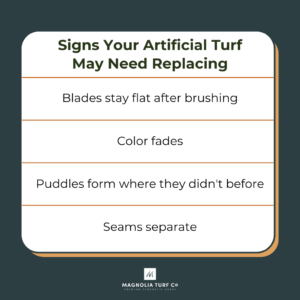
High-quality turf lasts 15–20 years with proper care. Watch for these signs that your turf may need replacing:
- Blades stay flat after brushing
- Color fades
- Puddles form where they didn’t before
- Seams separate
If any of these issues show up before year 10, the original artificial turf installation cut corners. We see it all the time.
All our residential products carry a 15-year warranty, and our PFAS-free, 100% lead-free materials are safe for kids and pets to play on every day.
Frequently Asked Questions About Artificial Grass Maintenance
Can you pressure wash artificial turf?
Don’t pressure wash your turf. High-pressure water displaces infill and damages fibers. A garden hose works fine for regular cleaning.
Does artificial grass get moldy?
Turf with Microban antimicrobial coating resists mold and mildew. Budget products without this protection are more vulnerable, especially in Florida.
How do you remove chewing gum from artificial turf?
Freeze it with ice or an aerosol refrigerant. Once it hardens, scrape it off. The turf won’t stain.
Do weeds grow through artificial grass?
Weeds rarely grow through properly installed turf. If you spot a few along the edges, a water-based herbicide takes care of them without damaging the surface.
How do you get rid of smells from artificial grass?
Rinse the area with a hose and apply an enzyme-based cleaner. If odor persists, the problem is likely drainage. Our flow-through backing prevents urine pooling that causes most complaints.
Is artificial grass maintenance different for putting greens?
Putting greens need lighter brushing with a softer brush to protect the shorter pile height. Keep them clear of debris and rinse regularly.
Keep Your Artificial Grass Looking New
We’ve installed over 10,000 yards across Texas and Florida, and our owner, David Turner, supervises every project. That means no miscommunication between a sales rep and the crew, so your turf performs the way it’s supposed to from day one.
Artificial grass maintenance is simple when you start with a high-quality installation. Cut corners on the install, and no amount of maintenance will save it.
Learn more about our installation process, or call us today to talk through your project.