Most homeowners ask us how to clean artificial grass before they ask about price. They want to know what they’re getting into.
Here’s the truth from someone who’s installed over 10,000 lawns across Texas and Florida: cleaning artificial turf is a lot easier than maintaining natural grass… but only if you install it properly in the first place.
The straightforward answer? Remove debris with a leaf blower or rake. Rinse with your garden hose. Spot clean any stains with mild soap and water. If you have pets, use an enzyme cleaner like PE 51 about four times a year. That’s it.
But there’s more to the story. How you clean your artificial turf, and how easy it is to keep clean, depends on what’s underneath it.
Why Proper Installation Makes Cleaning Artificial Grass Easier
Here’s something other turf companies won’t tell you: The difference between artificial turf that’s easy to maintain and artificial turf that becomes a problem isn’t the grass itself. It’s what’s underneath.
We install four inches of crushed limestone as our sub-base, using half-inch to one-inch pieces we properly compact. That foundation drains quickly and completely.
A lot of artificial grass companies use decomposed granite. Some use crushed concrete. Both compact well, which sounds good until you realize they don’t drain.
When your dog urinates on the turf, or when you rinse it down, that water needs somewhere to go. With poor drainage, it sits. When it sits, it smells.
We’ve repaired enough failing installations to know what happens. Pet odors won’t go away no matter how much you clean. Water pools after rain. Bacteria grow underneath the turf where you can’t see.
Proper sub-base drainage means urine and rinse water flush right through. The difference between a yard you rinse off weekly and a yard that needs constant deep cleaning to fight odors is four inches of limestone that drains well (versus two inches of material that compacts tight).
Product Features That Matter for Synthetic Lawn Care
The turf itself makes a difference, too. Not all artificial grass is built the same way.
Our turf has flow-through backing that drains at 900 inches per hour. Most products drain around 40 inches per hour. That’s not marketing speak. That’s the difference between water rushing through versus pooling on the surface.
For pet owners, this matters. Dog urine drains through immediately instead of sitting on the blades. Less contact time means less odor, less bacterial growth, and less time you spend cleaning artificial grass.
The Microban antimicrobial coating helps, too. It actively prohibits bacterial growth on the turf fibers.
That doesn’t mean you never have to clean. It means bacteria doesn’t get a foothold between cleanings. Long term, that prevents the smell and mold issues that come with cheaper products.
When it comes to artificial grass maintenance, the blade design itself helps in ways most homeowners don’t consider.
Our turf uses W-shaped, S-shaped, and C-shaped blades with reinforced spines. Those shapes handle foot traffic better than flat blades. They bounce back instead of staying matted down. That means less intensive brushing to keep your turf looking upright and natural.
When artificial grass stays upright, debris sits on top instead of working down into the fibers. It’s easier to blow off, easier to rake, and easier to rinse clean.
How to Clean Artificial Grass: The Basic Process
When our customers ask us how to clean artificial grass, here’s what we tell them:
For most homeowners without pets, maintenance is simple. Remove leaves and debris as needed with a leaf blower or plastic rake. Rinse with your garden hose when dust builds up or during dry seasons. That’s about it.
If you have trees in your backyard, you’ll clean more often. Fall brings leaves, and spring brings pollen. A leaf blower works great for regular debris. There are turf vacuums like the Turf Matic if you want to get more thorough, but most people find a blower handles it fine.
Texas dust accumulates fast, particularly in Dallas and San Antonio during dry stretches. A quick rinse with the garden hose every week or two keeps the artificial grass looking fresh and removes the dust that dulls the color.
You don’t need to soak it. Just spray it down for one minute, maybe two.
If you’re a pet owner, add an enzyme cleaner to your artificial grass maintenance routine. We recommend PE 51. It’s an enzyme made for turf and dogs. Attach it to your hose, spray the entire yard, and let it work.
Do that about four times a year. It deep cleans the turf and breaks down the proteins in pet urine that cause odors.
Pick up solid waste daily. The urine drains through, but the solid waste doesn’t. Use a simple scooper and bag, just like you would with natural grass.
Texas Climate Challenges, Artificial Turf Maintenance Solutions
The Texas heat affects how you maintain artificial grass.
It’s not that artificial turf can’t handle the heat. It’s designed to withstand intense sun and high temperatures. But from June through August, particularly from noon to four in the afternoon, the direct sun makes artificial turf hot.
If you don’t have shade in your backyard, your artificial turf will be uncomfortable to walk on barefoot during those peak hours.
The solution is simple: Rinse it down with your sprinkler or hose.
You don’t need to soak it for ten minutes. One minute of water cools the surface noticeably. If you have a sprinkler system, running it for a minute once or twice on peak heat days helps keep everything comfortable.
This isn’t extra work. It’s the same rinsing that helps with dust and pet waste.
In Houston, where humidity is higher, regular rinsing helps prevent moisture-related bacterial buildup. In Austin and San Antonio, where water restrictions are common, you’re using less water than you would to maintain natural grass.
Our artificial grass handles all of it. The proper sub-base keeps drainage working regardless of the weather, while the Microban coating helps in humid conditions. The flow-through backing prevents standing water after storms.
Common Artificial Grass Cleaning Mistakes to Avoid
The biggest mistake we see is pet owners failing to maintain their artificial grass: not picking up solid waste, not rinsing regularly, and not using enzyme cleaner.
Dog poop and urine left alone will smell. It’ll affect the turf’s appearance and value. That’s not the turf’s fault. That’s neglect.
Avoid pressure washers. The high pressure can damage the turf fibers and backing. A regular garden hose provides plenty of water pressure for cleaning without the risk of damage.
Don’t use metal rakes to clean artificial grass. Plastic rakes or stiff brooms with synthetic bristles work fine. Metal can tear the backing or damage the fibers.
Skip harsh chemicals like bleach or ammonia-based cleaners. They degrade the turf over time and can irritate your pets’ paws. Stick with mild soap and water for spot cleaning. Use enzyme cleaners for deep cleaning. That’s all you need.
If you spill something sticky like gum or tree sap, don’t scrub it aggressively. Use dry ice or an aerosol refrigerant to harden it, then gently scrape it off. This works better and doesn’t damage the fibers.
Your Artificial Grass Maintenance Schedule
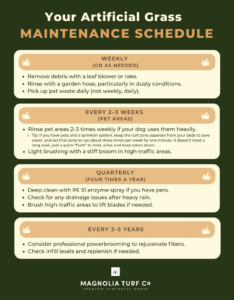
After 10,000 installations, we’ve learned it’s best to keep it simple. Here’s how to clean artificial grass:
Weekly (or as needed):
- Remove debris with a leaf blower or rake
- Rinse with a garden hose, particularly in dusty conditions
- Pick up pet waste daily (not weekly, daily)
Every 2–3 weeks (pet areas):
- Rinse pet areas 2–3 times weekly if your dog uses them heavily.
- Tip: If you have pets and a sprinkler system, keep the turf zone separate from your beds to save water, and set that zone to run about three times per week for one minute. It doesn’t need a long soak, just a quick “flush” to rinse urine and keep odors down.
- Light brushing with a stiff broom in high-traffic areas
Quarterly (four times a year):
- Deep clean with PE 51 enzyme spray if you have pets
- Check for any drainage issues after heavy rain
- Brush high-traffic areas to lift blades if needed
Every 3–5 years:
- Consider professional powerbrooming to rejuvenate fibers
- Check infill levels and replenish if needed
If you don’t have pets or large trees, your maintenance drops to occasional debris removal and periodic rinsing. That’s it.
Can You Clean Artificial Grass Yourself?
If you’re asking, “Can I clean artificial grass myself?”, rest assured that you absolutely can.
If your turf starts looking a bit flat in high-traffic areas, you can refresh it yourself and save money. All you need is silica sand and a turf rake.
Spread the sand evenly across the area that needs refreshing. Use the turf rake to groom it into the turf. The sand adds weight to the blade bases and helps them stand upright, and the raking fluffs the artificial grass back up.
You can buy the supplies from us if you’d like, or you can handle it yourself. Some people prefer saving time and having us do it, while others like the DIY cost savings. There’s no wrong answer.
How to Clean Artificial Grass: The Bottom Line
Cleaning artificial grass isn’t complicated. Remove debris. Rinse periodically. Use enzyme cleaner if you have pets. Avoid harsh chemicals and pressure washers.
That covers 95% of what you need to know.
The other 5% is understanding that ease of maintenance starts with proper installation. The difference between turf that’s easy to maintain for 15 years and turf that becomes a problem in five is a good drainage foundation, premium grass with the right features, and professional installation that doesn’t skip steps.
We’ve installed 10,000 artificial grass lawns across Texas and Florida. The installations with a proper sub-base, high-quality products, and homeowners who follow basic maintenance look great year after year.
If you’re considering artificial turf, factor in maintenance from the start. Ask your installer about drainage, product features, and the cleaning routine. Most companies will give you generic answers, but we’ll tell you exactly what our customers do, since we stay in touch with them long after installation.
Ready to see what low-maintenance outdoor living actually looks like? Get a free estimate for artificial grass that’s designed for easy maintenance.