Artificial turf infill is the material installers spread between synthetic grass blades to add weight, prevent damage, and keep the blades standing upright.
The best infill for artificial grass depends on whether you have pets, how hot your climate gets, and your budget. Most Texas and Florida homeowners choose silica sand for general use or OptiFILL+ for pet areas.
Quick Answer for Texas and Florida Homeowners
If you have dogs, OptiFILL+ or zeolite infill handles drainage and odor control better than basic sand.
If heat is your main concern, zeolite stays 20–30% cooler than standard options.
For general residential use without pets, silica sand works fine and costs less.
What Is Artificial Turf Infill?
Every artificial turf installation needs infill. Without it, the blades flop over and the turf shifts when you walk on it. Infill adds weight to keep the turf in place, supports blades so they stand upright, and creates a surface that actually feels like grass underfoot.
We use two to three pounds of infill per square foot on our installations. Some companies use one to two pounds to cut costs, but that’s not enough to keep blades standing over time. After 10,000+ installations across Texas and Florida, we know what works.
Why Your Artificial Turf Infill Choice Matters
The wrong infill creates problems you’ll deal with for years.
Pet owners who choose basic silica sand call us within a year complaining about odor. Silica sand doesn’t drain fast enough for pet urine, and it doesn’t control bacteria. The smell builds up, and hosing it down only helps temporarily.
In the Texas and Florida heat, dark-colored infill absorbs sunlight and makes your grass uncomfortably hot. Light-colored infill with heat-reduction properties stays 20–40°F cooler.
Drainage matters, too. Our flow-through backing drains 30+ inches of liquid per hour, but infill that compacts or holds moisture works against that system. The right infill moves liquid through quickly.
Artificial Turf Infill Comparison

Is Silica Sand Good for Artificial Turf?
Silica sand is the most common artificial turf infill. It’s made from silica and oxygen, comes in a natural golden color, and costs less than specialty infills.
This option works best for general residential use without pets, decorative areas, and front yards with light foot traffic.
Pros:
- It’s the most cost-efficient option.
- It provides good drainage when properly installed.
- It keeps blades upright.
- It’s USGA approved for putting greens.
Cons:
- It’s not ideal for pet areas because it doesn’t control odor or bacteria.
- It can compact over time in high-traffic zones.
- It doesn’t reduce heat.
Our silica sand is kiln dried and comes in 12/20 or 16/30 grit sizes. For non-pet installations, it’s a solid choice that gets the job done.
What Is the Best Infill for Pet Turf?
If you have dogs, silica sand isn’t good enough. You need OptiFILL+ for proper drainage and odor control.
OptiFILL+ drains faster than standard sand and includes odor-neutralizing properties. When your dog urinates on the turf, the liquid moves through quickly instead of pooling on the surface.
We pair OptiFILL+ with our Microban antimicrobial coating, which reduces bacteria by 99%. The combination handles heavy pet use better than any other setup we’ve tested.
Cost: About 30 cents more per square foot than silica sand. For a 500-square-foot pet area, that’s $150 extra.
Does Zeolite Infill Reduce Heat?
Zeolite is a natural volcanic mineral that absorbs ammonia from pet urine and reduces surface temperatures. It works best for yards with pets in hot climates, south-facing installations, and areas without shade.
Zeolite absorbs odor-causing ammonia at the molecular level. It stays 20–30% cooler than standard infill because of how it reflects and releases heat. In Dallas and Houston, where turf surface temps can reach 120–140°F on a 100°F day, that difference matters if you’re barefoot or your dog needs to go out in the afternoon.
Choose zeolite over OptiFILL+ if heat is your primary concern, as zeolite performs better on temperature. If odor control is the priority and heat is manageable, OptiFILL+ is the better choice.
What Infill Has Antimicrobial Protection?
Envirofill uses a SmartFill coating with built-in antimicrobials that prevent bacteria, mold, and mildew growth. It works best for playgrounds, pool areas, families with young children, and humid climates like Florida.
Envirofill’s manufacturer bakes the antimicrobial coating into the infill rather than spraying it on top. It lasts the infill’s life rather than wearing off over time.
Florida’s humidity creates conditions where mold and mildew thrive. Envirofill handles that better than uncoated options. We recommend it for installations near pools and in areas where kids play on the ground frequently.
What About Crumb Rubber?
Crumb rubber is made from recycled tires and provides cushioning for sports fields and playgrounds.
For residential yards in Texas or Florida, crumb rubber has drawbacks. It absorbs heat and gets hot in direct sun. It can leave black dust on skin and clothing.
Crumb rubber works well for sports facilities with proper shade structures. For backyard installations, sand-based infills are better choices for most homeowners.
What’s the Best Infill for Artificial Turf?
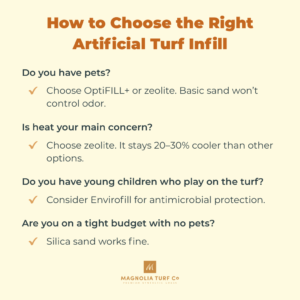
Do you have pets? Choose OptiFILL+ or zeolite. Basic sand won’t control odor.
Is heat your main concern? Choose zeolite. It stays 20–30% cooler than other options.
Do you have young children who play on the turf? Consider Envirofill for antimicrobial protection.
Are you on a tight budget with no pets? Silica sand works fine.
Request a free estimate to learn about the right artificial turf infill for your property. Your yard’s sun exposure, drainage, and intended use determine which option makes the most sense.
Frequently Asked Questions About Artificial Turf Infill
How often should I replace infill?
Top up high-traffic areas every two to three years. Complete replacement typically happens around years 10–12 for high-quality residential installations.
Can I change my infill type later?
Yes. You can remove old infill and add new infill, though it adds labor costs. Choosing the right infill upfront is more cost-effective.
Does infill affect drainage?
Yes. High-quality infill works with your drainage system. Poor infill compacts and blocks water flow. Our installations combine the right infill with flow-through backing that drains 30+ inches per hour.
Is artificial turf infill safe for kids and pets?
Our infill options are PFAS-free and 100% lead-free. Combined with Microban antimicrobial coating, they’re safe for families and pets.
What infill do you use for putting greens?
We use silica sand in 12/20 or 16/30 grit. It provides the right ball roll and meets USGA requirements.
Get the Right Infill for Your Yard
We’ve completed 10,000+ installations across Texas and Florida. Our owner personally oversees every project to make sure the materials and installation are done right.
Get a free estimate, and we’ll recommend the best artificial grass infill for your situation. We’ll give you straight answers about what your yard needs.