Table of Contents
- Introduction
- Common Artificial Grass Problems Explained
- Artificial Grass Installation Problems and Prevention
- Artificial Grass Quality Problems
- Pet-Related Artificial Grass Problems and Solutions
- Artificial Grass Heat and Climate Problems
- Artificial Grass Drainage Problems
- Artificial Grass Maintenance Problems
- Warranty and Quality Assurance
- Frequently Asked Questions
- Get a Problem-Free Artificial Grass Installation
- Related Resources
Introduction
Most artificial grass problems are 100% avoidable.
That’s not marketing spin. We’ve completed more than 10,000 installations across Texas and Florida, and the turf failures we get called to repair almost always trace back to two causes: poor installation or cheap materials. Sometimes both.
This guide covers every common artificial grass problem you might encounter, from visible seams and drainage failures to pet odors and heat concerns. More importantly, it explains how to prevent these issues. Fixing artificial grass problems costs more than doing it right the first time.
Whether you’re researching artificial turf before making a purchase or troubleshooting issues with an existing installation, you’ll find practical, actionable solutions here. We’ll cover what separates quality installations from ones that fail, how Texas and Florida climates create unique challenges, and what to look for when choosing products and installers.
Proper installation and high-quality materials eliminate most artificial grass problems before they start.
Common Artificial Grass Problems Explained
Artificial grass problems fall into two categories: installation-related issues and product-related issues. This distinction determines whether a problem can be fixed or whether the entire installation needs replacement.
Artificial grass installation problems include uneven surfaces, visible seams, poor drainage, sinking spots, wrinkles, and lifted edges. These happen when corners get cut during prep work: inadequate sub-base, improper compaction, rushed seaming, or insufficient anchoring. The turf itself might be perfectly fine, but the foundation underneath fails.
Artificial grass product problems include premature fading, fiber breakdown, matting that won’t recover, and backing deterioration. These occur when low-quality materials can’t handle the conditions they’re exposed to: UV intensity, foot traffic, pet use, or climate demands.
The frustrating reality is that DIY installations and inexperienced contractors cause most artificial grass problems. That budget installer quoting $8 per square foot isn’t using magic to hit that price. They’re skipping steps that matter.
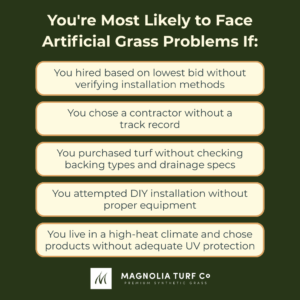
You’re most likely to face artificial grass problems if:
- You hired based on lowest bid without verifying installation methods
- You chose a contractor without a track record
- You purchased turf without checking backing types and drainage specs
- You attempted DIY installation without proper equipment
- You live in a high-heat climate and chose products without adequate UV protection
The good news is that every problem in this guide has a prevention strategy. Let’s start with the most common failure point: what happens underneath your turf.
Artificial Grass Installation Problems and Prevention
The base determines everything. A turf installation is only as good as what’s underneath it, and this is where most artificial grass problems begin.
Sub-Base Preparation Failures
Sinking, dips, and uneven surfaces appear weeks or months after installation. Water pools in low spots. The turf looks wavy or lumpy.
This happens when installers skip proper sub-base preparation to save time and materials. Instead of excavating three to four inches and laying compacted crushed stone, they install turf over existing soil or use an inadequate one- to two-inch base.
Proper base preparation means three to four inches of crushed limestone or decomposed granite. Not optional, not negotiable. This depth provides the drainage and stability that keeps your turf looking and performing great for 15 years instead of five.
The process requires removing four to six inches of existing soil, sod, and debris before laying any base material. In heavy clay areas common throughout Dallas, Houston, and Central Texas, excavation may need to reach seven inches.
The base must be compacted using a plate compactor to 85–95% density, not raked smooth. Improper compaction is the leading cause of settling and sinking.
We’ve seen what happens when companies cut corners here: turf develops soft spots that feel unstable underfoot, wrinkles form as the base settles unevenly, water pools in low spots creating muddy patches, and edges lift away creating tripping hazards.
Visible Seams
You can see where turf panels meet. Lines run across your lawn that are visible from normal viewing distances.
This happens from misaligned grain direction between panels, inadequate seam tape or adhesive, failure to trim edges at the correct angle, or improper weighting during cure time.
Professional seaming requires precision: aligning fiber grain direction consistently across all panels, trimming panel edges at a 45-degree angle for cleaner joins, using quality seam tape with proper adhesive application, weighting seams during curing, and installing over a level, compacted base. Uneven bases create visible seams even with proper technique.
The goal is seams you can’t spot even when you’re looking for them. That takes practice and proper technique.
Lifted Edges and Wrinkles
Edges pull up from the perimeter. Ripples or waves develop across the surface.
This results from insufficient anchoring, failure to stretch turf before securing, inadequate infill weight, or temperature swings causing expansion and contraction.
Proper edge securing requires nails or staples every six to eight inches around the entire perimeter, not every twelve inches. Turf needs to acclimate in warm sun before final fastening. Infill at two to three pounds per square foot provides the ballast that keeps turf in place. Proper edging or curbing anchors the perimeter permanently.
Weed Growth Problems
Weeds push through the turf surface, creating bumps and requiring ongoing maintenance.
This happens when no weed barrier is installed or when the barrier is damaged or has gaps.
Prevention requires installing a commercial-grade weed barrier membrane over the compacted base before laying turf, overlapping membrane seams by at least six inches, and securing membrane edges to prevent shifting during turf installation.
Learn more about proper artificial grass installation.
Artificial Grass Quality Problems
Not all artificial turf is created equal. The materials you choose determine how your lawn looks and performs for the next 15+ years. Or whether it fails in five.
Identifying Low-Quality Turf Before You Buy
Low-quality turf has telltale signs if you know what to look for:

Fiber Degradation and UV Damage
Blades become brittle, tips turn white or fade, fibers split or break off. The turf looks worn after only a few years.
This happens from inadequate UV stabilizers in the fiber manufacturing process. Cheaper turf skips proper UV treatment to cut costs.
Quality manufacturers incorporate UV inhibitors into the yarn during production and provide accelerated UV testing data. Look for products that warranty against fading with specific criteria, such as no more than 50% loss of tensile strength under UV exposure during the warranty period. Premium products include UV inhibitors rated for 15+ years even in extreme Texas and Florida sun.
Color Fading and Matting
Turf loses its vibrant appearance. Blades flatten and won’t stand back up, even with brushing.
This comes from low-quality fibers without proper resilience, insufficient face weight, or lack of a thatch layer to support blade structure.
Choose turf with a face weight above 60 oz/sq yd and a pile height between 1.5–2 inches. Shorter pile looks like carpet; taller pile (over two inches) is harder to maintain and more prone to matting.
The Real Cost of Cheap Turf
Budget turf typically lasts five to ten years before cosmetic replacement becomes necessary. Mid-range products last 10–15 years. Premium turf with proper installation lasts 15–20 years in Texas and Florida climates.
When you calculate replacement costs, disposal fees, and installation labor every seven years versus once in 20 years, quality turf costs less over time.
Learn about our high-quality artificial grass products.
Pet-Related Artificial Grass Problems and Solutions
Dogs and artificial turf can coexist beautifully, but only with the right setup. Pet-related artificial grass problems are among the most common complaints we hear about existing installations.
Odor Buildup Problems
Persistent ammonia smell, especially in warm weather. The odor worsens over time in spite of cleaning.
Dog urine contains ammonia, bacteria, and uric acid. As urine breaks down, ammonia concentrations rise and odor-causing compounds form.
Standard turf with hole-punched backing allows urine to linger on the backing surface. Without antimicrobial treatment and proper drainage, bacteria thrive. This is especially true in Texas and Florida heat.
The solution starts with drainage. Pet areas need turf with flow-through backing that drains 900 inches per hour. This flushes urine immediately rather than letting it pool.
Antimicrobial treatment matters. Products with Microban coating on blades and backing reduce bacteria growth by up to 99%. This isn’t marketing fluff. It’s chemistry that prevents odor-causing bacteria from multiplying.
The right infill makes a difference. OptiFILL+ infill provides antimicrobial properties and odor control. Standard silica sand provides no inherent odor protection. For pet applications, antimicrobial infill is worth the extra cost.
Regular rinsing completes the system. Hose down pet areas weekly (or more frequently in heavy-use yards) to flush urine through. Use enzymatic cleaners specifically designed for turf (like PE-51) that break down odor-causing bacteria. Avoid harsh household chemicals that can damage fibers.
We’ve installed pet turf for hundreds of dog owners across Texas and Florida. The ones who invested in proper drainage, antimicrobial backing, and appropriate infill from the start are glad they did.
Learn more about our pet turf installations.
Hot Surfaces and Paw Safety
Turf gets too hot for dogs to walk on during summer afternoons.
Artificial grass does get hotter than natural grass in direct sun. Turf surface temperatures can reach 160°F in direct sun during Texas and Florida summers. Veterinarians flag temperatures above 120–125°F as painful for dog paws.
The solutions are simple:
- Test before use: If you can’t hold your palm on the surface for five to ten seconds, it’s too hot for paws.
- Rinse to cool: A quick spray with a hose cools turf for several hours.
- Shade matters most: Shaded turf runs 30+ degrees cooler than turf in full sun. Trees, pergolas, and shade sails make a real difference.
Digging and Damage Prevention
Dogs dig at edges, creating gaps or damaging the perimeter.
Secure edges every six to eight inches with proper anchoring. Install rigid edging that dogs can’t easily access. For persistent diggers, consider concrete borders at digging-prone areas. Some owners create a designated digging pit with sand or loose dirt as an alternative outlet.
Learn more about artificial grass for pets.
Artificial Grass Heat and Climate Problems
Texas and Florida present specific challenges that generic artificial grass advice doesn’t address. What works in Seattle won’t work in Dallas.
Surface Temperature Reality
Artificial grass gets hot. Summer temperatures regularly exceed 100°F in our markets. Turf surface temperatures can reach 160°F in direct sun. That’s hotter than natural grass and comparable to concrete or asphalt.
Context matters, though. Turf cools immediately when shaded or rinsed. Unlike concrete, it doesn’t retain heat for hours. Morning and evening temperatures remain comfortable. Strategic shade placement changes usability completely.
Premium materials help. We use turf with built-in UV protection and LusterGuard technology that diffuses sunlight and reduces heat absorption. Light-colored infill helps reduce surface temperature compared to dark materials.
Window Reflection Melting
Spots of melted or deformed turf appear in specific areas, often in patterns that correspond to windows on your home or neighboring structures.
Low-E (low-emissivity) energy-efficient windows can reflect and concentrate sunlight like a magnifying glass. These reflected beams can reach temperatures above 200°F, well beyond the melting point of standard polyethylene turf fibers.
South- and west-facing windows are the primary culprits, especially on upper stories.
Prevention options include exterior turf-protector films or solar screens that diffuse reflected light, nylon turf in areas at risk (nylon has a much higher melting point), and landscape solutions like shrubs, fences, or pergolas that block reflection paths from reaching turf areas.
Regional Climate Considerations
Dallas and Austin are drought-prone with intense summer heat. Clay-heavy soils require thicker sub-bases (four inches rather than three) for proper drainage. The combination of minimal rainfall and high heat means some infill types may underperform. Antimicrobial-coated infill works more reliably than options that depend on rainfall to function.
Houston combines high humidity with heavy thunderstorms. Drainage is the priority. Installations need high-permeability turf and proper base preparation to handle sudden water volumes. Humidity accelerates bacterial growth, making antimicrobial treatments more important.
Tampa and the Florida Gulf Coast have sandy, fast-draining native soils that provide natural permeability advantages, but high rainfall and tropical storms still require proper base compaction. High humidity means frequent cleaning is a must for pet areas.
Learn more about regional considerations for Texas and Florida.
Artificial Grass Drainage Problems
Water that doesn’t drain creates a cascade of artificial grass problems: standing puddles, mold and mildew growth, odor development, and accelerated material breakdown.
Causes of Standing Water
Inadequate backing permeability is common. Standard hole-punched backing drains at 30–300 inches per hour, depending on the product. For pet areas or high-rainfall climates, this may not be enough. Flow-through backing handles 900 inches per hour.
Sub-base problems cause persistent issues. If the base material is too shallow, compacted with fine particles that reduce permeability, or installed without proper slope, water has nowhere to go.
Insufficient slope prevents drainage. Turf areas need a 1–2% slope directing water away from structures and toward appropriate drainage points.
Clogged infill develops over time. Organic debris, fine sediments, and algae can reduce drainage through the infill layer, especially without regular brushing and cleaning.
Backing Type Comparison

Preventing Moisture Problems
Match backing type to intended use. Flow-through backing works best for pets, high-traffic, or high-rainfall applications. Build a proper sub-base with open-graded aggregate (crushed limestone or decomposed granite, not fine stone dust). Grade for a 1–2% slope toward drainage outlets.
In heavy clay soils, consider French drains or perforated pipe systems to move water off-site. Use geotextile fabric between native soil and base to prevent fine particles from migrating into aggregate.
Concrete Installation Considerations
Installing turf over concrete creates unique drainage challenges since water can’t permeate through the slab. Solutions include perforated drain mats that create airspace under the turf, allowing liquids to flow to designated drains. Professional installation is strongly recommended for concrete applications.
Learn more about our artificial grass drainage technology.
Artificial Grass Maintenance Problems
Artificial turf requires less maintenance than natural grass, but it’s not zero maintenance. Neglecting basic care leads to artificial grass problems that could have been easily prevented.
Infill Displacement and Replenishment
Infill settles, migrates, or washes away over time. Blades flatten without support. Backing becomes visible in high-traffic areas.
Check infill levels at least annually. Look for backing exposure or areas where blades no longer stand upright. Replenish to maintain two to three pounds per square foot.
High-traffic and pet areas may need more frequent top-ups. Plan to add infill every three to five years as it compacts or displaces.
Learn about our artificial grass infill options.
Debris Buildup and Matting
Leaves, dirt, and organic material accumulate. Fibers mat down and lose resilience.
Weekly maintenance includes removing leaves and debris with a leaf blower or flexible plastic rake (never metal). Monthly rinsing removes dust and pollen. Rinse weekly for pet areas.
Every two to four weeks, brush against the grain to lift fibers and redistribute infill. Every three to five years, power brooming decompacts the surface and restores fiber resilience.
Common Maintenance Mistakes
Using metal rakes or wire brushes abrades and damages fibers. Use only flexible plastic rakes designed for turf.
Power washing too close displaces infill and can damage backing. If you must pressure wash, maintain distance and use wide spray patterns.
Harsh chemicals damage turf. Undiluted bleach, solvents, degreasers, and alcohol-based cleaners damage fibers and backing. Use only turf-specific cleaners.
Letting pet waste sit creates problems. Remove solid waste promptly and rinse the area. Allowing waste to dry makes cleaning harder and increases bacterial growth.
Skipping professional cleaning allows buildup. In pet areas and high-traffic zones, annual or biannual professional deep cleaning prevents bacterial buildup that homeowner rinsing can’t fully address.
Learn more about artificial grass maintenance.
Warranty and Quality Assurance
A warranty is only as good as what it covers.
What Warranties Typically Cover
Standard artificial turf warranties run 8–15 years, with quality residential products typically carrying 15-year coverage. Warranties generally cover UV degradation (fading or tensile strength loss from UV exposure), manufacturing defects (backing delamination, tuft bind failures, fiber separation under normal use), and excessive fiber loss (abnormal balding beyond expected wear).
What Warranties Don’t Cover
Improper installation voids coverage. If the base wasn’t built correctly or the turf wasn’t installed per manufacturer specifications, material warranties typically don’t apply.
External heat damage isn’t covered. Melting from window reflection is usually classified as external damage, not a product defect.
Improper maintenance voids warranties. Damage from harsh chemicals, neglect, or using incompatible infill falls outside coverage.
Non-standard use causes uncovered damage. Vehicle traffic on residential turf, open flames, or hot objects placed on the surface aren’t protected.
Protecting Your Warranty
Document everything. Keep product spec sheets, installation invoices, and contractor details. Photograph the sub-base before turf is laid. This documentation is needed for any future claim.
Verify installation methods. Ask contractors about base depth, materials, and compaction. Quality installers will explain their process; those cutting corners will be vague.
Use approved products. Infill, cleaners, and maintenance products must be approved for use with your specific turf. Using unapproved materials can void coverage.
Red Flags When Evaluating Contractors
Watch for contractors who won’t explain their base preparation methods or give vague answers about sub-base depth and materials. Much lower prices usually mean they’re cutting corners somewhere.
Ask for references and a portfolio of completed local installations. Be wary of pressure tactics or reluctance to provide written documentation. Any quality contractor offers a workmanship warranty separate from the product warranty.
Quality installers let their work speak for itself.
Learn why homeowners choose our warranty-backed products.
Frequently Asked Questions
Can I repair artificial grass problems myself, or do I need professional help?
Minor issues like small seam separations or localized infill replenishment can be DIY projects with the right materials. Problems stemming from sub-base failures, extensive drainage issues, or large-scale seaming problems usually require professional repair. In severe cases, complete reinstallation is more cost-effective than patching a flawed installation.
How much does it cost to fix artificial grass problems?
Repair costs vary widely. Simple seam repairs might run $200–500. Addressing drainage failures or sub-base problems often requires lifting the turf and rebuilding the foundation, which can cost $5–15+ per square foot depending on scope. The formula for fixing installation errors is roughly (Labor + Materials) × 2. This is why prevention matters. Proper installation costs more upfront but eliminates these expenses entirely.
How do I know if my turf needs replacing versus repairing?
Replace when you see widespread fiber degradation (brittle, breaking, or severely faded blades), backing that’s cracked or delaminating, or sub-base failures across large areas. Repair when issues are localized: a small seam, one drainage problem spot, or an isolated damaged area.
Why does my artificial grass smell, and how do I fix it?
Pet urine odor indicates drainage or bacterial issues. Short-term fixes include enzymatic cleaners and thorough rinsing. Long-term solutions may require adding antimicrobial infill, more frequent cleaning schedules, or in severe cases, installing turf with better drainage and antimicrobial properties.
Does artificial grass get too hot in Texas and Florida summers?
Yes, turf can reach 160°F in direct sun during peak heat hours. It cools immediately when shaded or rinsed, though. Unlike concrete, it doesn’t retain heat. Strategic shade, morning/evening use during peak summer, and quick rinses make turf comfortable for most of the day, most of the year.
How long does artificial grass last before needing replacement?
High-quality materials with professional installation last 12–20 years, depending on use and maintenance. Polyethylene turf typically lasts 12–16 years. Nylon lasts 15–20 years. Budget materials may only last 8–12 years. Proper base work and installation matter as much as material quality for longevity.
Get a Problem-Free Artificial Grass Installation
Every artificial grass problem in this guide has a prevention strategy. The common thread? Proper installation with quality materials eliminates most issues before they start.
Our owner, David Turner, built Magnolia Turf on one principle: Do it right, or don’t do it at all. That means three to four inches of properly compacted crushed limestone or decomposed granite. Flow-through backing that drains 900 inches of liquid per hour. Microban antimicrobial coating. PFAS-free products, because your family’s health isn’t negotiable. And a 15-year warranty, because we stand behind our work.
We’re not the cheapest option. We’re the right one.
Ready for a problem-free artificial turf installation? Call us or request a free quote online today.
We serve Dallas, Houston, Austin, San Antonio, Tampa, and Sarasota.
Related Resources
Magnolia Turf Guides:
- Artificial Turf Cost Breakdown
- How to Get 15 Years of Use Out of Your Artificial Grass
- Artificial Turf Around Pools
- Turf vs. Grass: Comparison for Texas and Florida Homeowners
Industry Standards: