Your dog tears up the backyard. Brown spots spread from their favorite bathroom area. Rain turns everything to mud, which ends up tracked through your house. And in a Texas summer, natural grass struggles to survive the heat while handling daily pet use.
These frustrations bring most pet owners to consider dog turf. The questions that follow are usually the same:
- Is dog turf safe?
- Will my dog actually use it?
- How hot does it get?
- Is it worth the investment?
We’ve installed artificial turf for thousands of dog owners across Texas and Florida. The results are consistent: yards that stay usable year-round, dogs that adapt quickly, and owners who wish they’d made the switch sooner.
Artificial turf isn’t the right choice for everyone, and the difference between a successful installation and a disappointing one comes down to understanding what you’re buying and how it’s installed.
This guide to dog turf includes all the information you need to make an informed decision. From product specifications and safety certifications to realistic costs and maintenance requirements, we’ll be direct about what works and what doesn’t.
We’ll be honest about the benefits and the trade-offs, too, since that’s how you make a decision you’ll be happy with in 10 years.
Learn more about our pet turf installations.
What Is Dog Turf?
Dog turf (or pet turf, K9 turf, or artificial grass for dogs) is synthetic grass engineered for the demands of pet ownership. It’s not the same product you’d install for a front lawn or decorative landscaping.
The differences matter. Standard landscape turf prioritizes aesthetics: tall, lush blades that look like natural grass. Pet turf prioritizes function: durability, drainage, and hygiene.
Key engineering differences include:
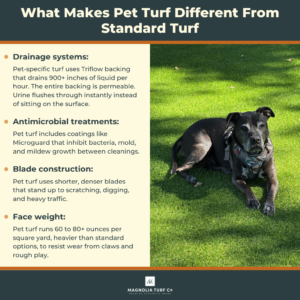
Drainage systems. This is the most important distinction. Standard turf backing drains around 30 inches of water per hour through perforated holes spaced every few inches. Pet-specific turf uses Triflow backing that drains 900+ inches of liquid per hour.
The entire backing is permeable. Urine flushes through instantly instead of sitting on the surface, which prevents ammonia buildup and odor problems.
Antimicrobial treatments. Pet turf includes coatings like Microguard that inhibit bacteria, mold, and mildew growth between cleanings. This isn’t a replacement for regular maintenance, but it reduces odor development and extends your turf’s life.
Blade construction. Pet turf uses shorter, denser blades that stand up to scratching, digging, and heavy traffic. For dedicated dog areas with concentrated use, pile heights around 1–1.5 inches work best. This keeps waste on top where you can remove it and makes rinsing effective.
For mixed family-and-pet yards, pile heights up to 1.75 inches provide a balance of comfort and durability. Taller decorative turf would mat down quickly under daily pet use.
Face weight. This measures fiber density per square yard. Pet turf runs 60 to 80+ ounces per square yard, heavier than standard options, to resist wear from claws and rough play.
When you see products labeled “dog grass,” “pet turf,” or “K9 grass,” these features are what distinguish them from general-purpose artificial turf. Not every product marketed for pets actually has all these features, which is why specifications matter more than marketing claims.
Learn more about our artificial grass drainage technology.
Who Should Consider Dog Turf?
Dog turf solves specific problems. Understanding whether those problems match your situation helps you decide if it’s the right investment.
Ideal candidates typically include:
Multiple-dog households. One dog is manageable. Two or more dogs using the same yard create concentrated traffic, multiple bathroom spots, and accelerated wear. Natural grass rarely survives this level of use in Texas heat.
Owners tired of lawn repairs. If you’re already spending time and money patching brown spots, reseeding, and fighting a losing battle with pet damage, turf eliminates that cycle permanently.
Water-conscious homeowners. Natural grass in Texas requires approximately 55 gallons per square foot per year. An 800-square-foot yard uses 44,000 gallons annually for irrigation alone. Turf eliminates that entirely.
Families who want usable outdoor space year-round. No mud season. No dead grass season. No waiting for the lawn to recover before letting the dogs out.
Texas climate makes this decision different than other regions. Our summers stress natural grass severely, watering restrictions are increasingly common, and the maintenance burden is higher than in milder climates. These factors tip the cost-benefit analysis toward turf more quickly here than in regions with gentler conditions.
Dog turf may not be the right fit if:
- You’re renting and can’t make permanent changes.
- Your budget is extremely tight (quality pet turf costs $7.10–$10.30 per square foot installed).
- You need a temporary solution for less than five years.
- Your dog has specific preferences that require natural grass.
Be honest with yourself about your situation. If budget is the primary constraint, a poorly installed bargain turf will disappoint you faster than maintaining natural grass. Quality matters more than having turf at all.
Learn more about the cost of dog turf.
Dog Turf Benefits and Drawbacks: An Honest Assessment
Every product has trade-offs. Understanding both sides helps you make a decision that works long-term.
The Real Benefits
Durability that natural grass can’t match. We’ve installed turf that’s handled three large dogs for 10+ years. The surface stays intact with no bare patches and no replanting. The backing is engineered to resist digging, and properly installed turf with adequate infill stays in place.
No mud, ever. Rain drains through immediately. Your dog can go out after a storm and come back with clean paws. This alone is worth the investment for many pet owners.
Reduced pest habitat. Fleas, ticks, and other pests that live in grass and soil have nowhere to hide on turf. Combined with the elimination of standing water, your yard becomes less hospitable to the bugs that bother both you and your pets.
Year-round usability. No dormant season. No dead patches. No recovery time after heavy use. The yard looks the same in January as it does in June.
Dramatic maintenance reduction. No mowing, fertilizing, aerating, or reseeding. Maintenance drops to occasional rinsing and periodic brushing.
Water savings. With Texas water costs averaging $7–9 per 1,000 gallons, eliminating lawn irrigation saves $300–600 annually for a typical backyard. Over 15 years, that’s $4,500–9,000 in water costs alone.
Learn more about high-quality artificial turf.
Legitimate Concerns to Consider
Heat retention. Artificial turf gets hot in direct sun, potentially reaching 150–180°F on peak summer afternoons without cooling technology. This is the most common concern Texas pet owners raise, and it’s valid.
Proper product selection and installation mitigate this: cooling infills can reduce surface temperatures by 30–50°F, and a one-minute water rinse cools turf for several hours. But if your yard has no shade and faces direct afternoon sun, you’ll need to manage heat during the hottest parts of summer days.
Upfront investment. Quality pet turf runs $8.90–$9.90 per square foot installed for most residential dog areas (400–1,000 sq ft). A 500-square-foot dog run costs $4,450–$4,950. That’s real money, even if it pays for itself over time.
Not identical to natural grass. Dogs adapt well, and the surface is comfortable. But it’s synthetic. If having natural grass matters to you for aesthetic or philosophical reasons, turf won’t fully replace that experience.
Requires proper installation. A cheap installation creates more problems than it solves. Poor drainage leads to odors. Inadequate base work causes settling and wrinkles. Skipped edge work allows dogs to lift the turf. The product is only as good as the installation underneath it.
How Proper Installation Mitigates Drawbacks
Most problems with dog turf trace back to installation shortcuts, not the turf itself.
Heat issues improve dramatically with proper infill selection. Envirofill and similar coated-sand infills reduce heat retention compared to rubber alternatives. Proper grading helps water flow across the surface during cooling rinses, too.
Odor problems result from inadequate drainage. Triflow backing that drains 900+ inches per hour eliminates the standing moisture that causes ammonia buildup. Cheap turf with hole-punched backing at 30 inches per hour simply can’t handle concentrated pet use.
Durability concerns disappear with appropriate product selection. The 60–80+ ounce face weight turf designed for pet use handles claws, digging attempts, and heavy traffic that would destroy lighter-weight options.
The right product, installed correctly, handles Texas conditions and active dogs for 15–20 years. The wrong product, or the right product installed poorly, creates frustration within two years.
Learn more about proper artificial turf installation.
Types of Dog Turf: Product Options and Features
Understanding the specifications helps you evaluate products and quotes. These are the features that determine how your turf performs.
Pile Height
For pet areas, shorter blades work better. For dedicated dog runs and high-traffic potty areas, pile heights in the 1–1.5 inch range keep waste on top where you can remove it, make rinsing effective, and resist matting under heavy traffic.
For mixed family-and-pet yards where comfort matters alongside durability, pile heights up to 1.75 inches provide a good balance.
Taller blades (2+ inches) look more natural but trap debris and waste deeper in the pile. They’re appropriate for decorative areas where the dog doesn’t spend concentrated time.
Face Weight
Face weight measures fiber density in ounces per square yard. It’s the primary indicator of durability and longevity.

For most pet owners, 60-ounce face weight provides the right balance of durability and cost. Heavy-use households with multiple large dogs should consider 70+ ounce options.
Backing Technology
This is the most important specification for pet turf.
Hole-punched backing (traditional) drains approximately 30 inches per hour. Holes are punched every three inches through urethane backing. It’s adequate for light residential use without pets.
Triflow backing drains 900+ inches of liquid per hour. The entire backing is permeable, with no barriers to drainage. It’s required for pet areas to flush urine immediately and prevent odor buildup.
The drainage difference is roughly 2,900% faster. That’s not a subtle distinction. For pet areas, Triflow backing isn’t optional. It’s necessary.
Blade Shape Technology
S-shaped blades feature ribbed textures that diffuse sunlight and reduce shine, creating a more natural appearance while eliminating weak points in the fiber.
W-shaped blades are designed for maximum durability and split resistance. The spine provides extra support against heavy traffic and rough play.
C-shaped blades offer a softer feel with good resilience, useful for mixed family-and-pet areas where comfort matters alongside durability.
Flat blades, found in budget products, mat down quickly under use and don’t recover. Avoid them for any area with regular foot traffic.
Heat Reduction Features
LusterGuard technology diffuses sunlight rays to reduce both sheen and heat absorption. It’s built into the fiber manufacturing process.
Envirofill infill is an acrylic-coated sand that reduces fluid absorption and helps with both drainage and cooling compared to rubber alternatives. It’s infused with Microguard antimicrobial protection, too.
UV inhibitors built into the yarn hold color for 15+ years even under intense Texas sun while reducing heat buildup.
For Texas installations, these aren’t premium upgrades. They’re necessary features. Products without heat-reduction technology become uncomfortable during summer months.
Learn more about our high-quality turf options.
Dog Turf Safety and Certifications: What Pet Owners Need to Know
Your dog will eat, roll on, and spend hours on this surface. Safety matters.
PFAS-Free Certification
PFAS (per- and polyfluoroalkyl substances) are “forever chemicals” that don’t break down in the environment and have been linked to health concerns. Modern quality turf is independently tested and certified PFAS-free.
What to look for: Ask for written lab reports specifying the test method (EPA Method 1633 or total organic fluorine testing), the list of PFAS compounds tested, and detection limits. California’s standards for children’s products set the strictest current benchmarks.
Magnolia Turf products are independently tested and verified PFAS-free. This isn’t a selling point. It’s basic responsibility.
Lead-Free and Heavy Metal Compliance
Lead-free certification means the product meets CPSIA (Consumer Product Safety Improvement Act) limits of 100 ppm total lead, the standard for children’s products. Quality pet turf is certified 100% lead-free and free of other heavy metals of concern.
Request third-party lab certificates. Reputable manufacturers provide this documentation.
Antimicrobial Technology
Microguard coating is applied during manufacturing and works continuously to inhibit bacteria, mold, and mildew growth. It reduces odors caused by pet waste and extends turf lifespan by preventing biological breakdown.
Important clarification: Antimicrobial treatment is not a disinfectant. It doesn’t eliminate bacteria on contact. It prevents growth between cleanings. You still need to maintain your turf regularly.
Heat Safety Considerations
Surface temperatures during peak summer hours (12–4 p.m., June–August) require management. Cooling strategies include:
- Proper infill selection: Envirofill and similar coated sands run cooler than rubber.
- Quick cooling rinses: A one-minute water spray drops surface temperature by 30–50°F for several hours.
- Shade planning: Existing shade or additions reduce direct heat exposure.
- Time management: During extreme heat, limit midday use the same way you’d limit walks on hot pavement.
Turf doesn’t retain heat the way concrete or asphalt does. It cools quickly once you address it. But during peak exposure, management is necessary.
Learn more about the ideal turf for dogs.
Dog Turf Installation Process: What to Expect
Proper installation determines whether your turf lasts 15 years or fails in five. Here’s what a professional pet turf installation includes.
Initial Consultation
A thorough assessment covers your yard’s drainage patterns, soil conditions, sun exposure, and your specific needs (number of dogs, primary use areas, aesthetic preferences). This shapes the product recommendation and installation approach.
Good installers ask questions. They want to understand how you’ll actually use the space so they can build it right.
Site Preparation
Excavation removes existing grass, roots, and soil to the appropriate depth, typically four to five inches to accommodate base material and turf.
Grading establishes proper slope for drainage away from structures. Water needs to flow somewhere, and that planning happens before any material goes down.
Sub-Base Installation
This step separates quality installations from failures.
Three to four inches of crushed limestone or decomposed granite, compacted in lifts. This provides the drainage and stability that keeps your turf performing for years.
Companies skip or minimize this step since it’s expensive and labor-intensive. When they do, you get settling, wrinkles, drainage problems, and premature failure.
We don’t skip it. Ever. We’ve repaired enough failing installations to know the difference proper base work makes.
Turf Installation
Turf placement positions seams strategically to minimize visibility and avoid high-traffic areas.
Seaming joins pieces using specialized adhesive and backing tape. Proper seams are invisible and won’t separate under use.
Securing anchors turf edges with non-galvanized nails (which rust slightly and grip better) spaced every six inches. This prevents dogs from lifting edges and creates a finished border.
Infill Application
Infill (typically Envirofill for pet installations) provides ballast, supports blade structure, aids drainage, and incorporates antimicrobial protection. It’s brushed in and distributed evenly across the surface.
Edge Protection
Proper edging contains the turf and prevents dogs from digging underneath. Options include concrete mow strips, steel or aluminum edging, or integration with existing hardscape. This detail matters for pet installations specifically.
Timeline
Most residential pet turf installations finish in one to three days, depending on the project’s size and complexity. Expect minimal disruption to your daily routine and your pets’ outdoor access.
Learn about our complete installation process.
Dog Turf Cost Breakdown and Long-Term Value
High-quality pet turf costs more upfront than natural grass, but over time, the math shifts dramatically in pet turf’s favor.
Installation Cost Components
Quotes coming in under $7/sq ft almost always skip or minimize base work, use inferior backing, and cut labor costs. Those savings create problems within two to three years.
Project Cost Examples

Comparison: Natural Grass Annual Costs in Texas
For a typical 1,200-square-foot lawn in Texas, natural grass maintenance runs approximately $2,268 per year:

Return on Investment Timeline
Artificial turf typically pays for itself in 2.5–4 years compared to natural grass maintenance costs.
With a 15–20 year product lifespan, that’s 11–17 years of savings after the break-even point, plus time savings, eliminated frustration, and a yard you can actually use year-round.
The investment breaks down to real long-term value. Over 15 years:
- Natural grass total cost: $34,000+ (initial sod + annual maintenance)
- Artificial turf total cost: $10,500–$12,500 (installation + minimal maintenance)
- Net savings: $22,000–$23,500+
Learn how to get 15–20 years of use out of your pet turf.
Financing Options
Magnolia Turf offers financing through Wisetack and Acorns. We understand quality installation requires upfront investment that pays for itself in 2.5–4 years through eliminated maintenance costs and water savings. Approval and rates depend on individual financials.
Maintenance and Odor Control: Keeping Your Dog Turf Fresh
Dog turf requires dramatically less maintenance than natural grass, but it does require some regular attention. Here’s what to expect.
Daily Maintenance
Solid waste removal: Pick up feces immediately or at least daily. This prevents odor buildup, keeps the surface clean, and reduces fly attraction. Takes two to three minutes.
Weekly Maintenance
Thorough rinsing: Full rinse of entire surface with a garden hose. Focus on high-traffic and potty areas. This removes dust and dilutes urine residue. Takes 10–15 minutes.
For heavy-use households (multiple dogs, frequent bathroom use), rinsing two to three times per week keeps the turf fresher.
Monthly Maintenance
Brushing: Use a stiff-bristle push broom to groom turf fibers and prevent matting. Brush against the grain to lift compressed fibers. Takes 15–20 minutes.
Deep cleaning: Apply PE-51 enzyme cleaner or similar product to the surface. Let sit 10–15 minutes, then rinse thoroughly. This breaks down organic matter and neutralizes odors. Takes 30–40 minutes, including wait time.
Odor Prevention Strategies
The secret to odor-free pet turf is drainage, not cleaning. Turf with Triflow backing (900+ inches per hour) flushes urine immediately. Budget turf with hole-punched backing (30 inches per hour) lets moisture sit, which creates ammonia buildup.
If you install the right product correctly, odor control is straightforward:
- Remove solids promptly.
- Rinse weekly (or more frequently for heavy use).
- Apply enzyme cleaner monthly.
- Make sure proper drainage was installed initially.
For stubborn odors, a simple solution works: Mix 90% white vinegar and 10% dish soap with a sprinkle of baking soda. Apply, let sit for 10 minutes, rinse thoroughly.
Quality turf with proper drainage and regular maintenance shouldn’t develop persistent odor. If it does, drainage is likely inadequate.
Seasonal Considerations for Texas
Summer: More frequent rinsing helps with both odor control and cooling. Evening rinses before the next day’s heat provide the most benefit.
Fall/Spring: Standard weekly maintenance is usually sufficient.
Winter: Reduced maintenance needs, but continue waste removal and periodic rinsing.
Learn more about regional-specific dog turf concerns.
Professional Refresh Services
Every three to five years, professional power-brooming de-compacts infill, lifts fibers, and restores your turf’s appearance and drainage performance. This extends lifespan by several years for heavy-use areas.
Think of it like professional carpet cleaning: not required constantly, but beneficial periodically.
Learn more about dog turf maintenance.
Design Ideas for Dog Turf Installations
The best pet turf installations balance function with aesthetics. Your yard should work for your dogs and look good to you.
Dedicated Dog Runs
A dedicated dog run creates a contained space for bathroom use and rough play, protecting the rest of your yard. Common configurations include side-yard runs (typically 4×15 to 6×20 feet), corner L-shaped designs that maximize space, and fenced play areas for dogs who need boundaries.
Design considerations: Include a hose bib nearby for easy rinsing. Position drainage to flow away from the house. Consider shade coverage for summer comfort.
Full Backyard Transformations
Many pet owners convert entire backyards to turf. This eliminates natural grass maintenance entirely while creating a year-round usable space for both family and pets.
Mix zones intentionally: shorter pile heights (1–1.5 inches) in primary pet areas, slightly taller turf (1.5–1.75 inches) in family gathering spaces. This provides appropriate drainage where pets use the yard most while maintaining comfort elsewhere.
Pool Surrounds and Transition Areas
Pet turf around pools eliminates mud tracking and provides a slip-resistant, comfortable surface. Proper edging contains the turf and creates clean transitions to hardscape.
Practical Design Tips
Position potty areas away from seating and play zones. Install turf slightly below surrounding hardscape (1/4 inch) for clean drainage transitions.
Plan for hose access to primary pet areas. Consider a rinse station or outdoor shower for muddy-paw situations.
Frequently Asked Questions About Dog Turf
How quickly do dogs adjust to artificial turf?
Most dogs adapt within a few days to two weeks. The key is consistency. Keep their routine the same, use positive reinforcement, and give them time. Dogs care more about scent and habit than the surface material itself.
Facilities that switch from gravel or dirt to pet turf report quick acceptance since the softer surface is more comfortable. The main barrier is scent and routine, not the material. Individual dogs may have preferences, but the vast majority adapt without issues.
Does dog turf drain properly during heavy rain?
Triflow backing drains 900+ inches of liquid per hour. For context, a severe Texas thunderstorm rarely exceeds four to six inches per hour. Properly installed pet turf handles any weather you’ll experience. Water clears within minutes, not hours.
The key factor is proper base preparation underneath, not the turf itself. Crushed granite or limestone provides the drainage path for water to move away from the surface.
How hot does artificial turf get, and is it safe for dogs’ paws?
Turf does get warm in direct sun, potentially reaching 150–180°F on peak summer afternoons without mitigation. Premium materials with cooling infill stay noticeably cooler (30–50°F reduction). A simple one-minute water rinse drops surface temperature for several hours.
Most pet owners find heat is only an issue during peak afternoon sun in summer. Shaded areas remain comfortable. Manage midday summer use the same way you’d manage hot pavement: morning and evening use during extreme heat, cooling rinses when needed.
Does the warranty cover pet damage?
Product warranties (typically 15 years) cover material issues: fading, manufacturing defects, UV protection, and fiber degradation. Normal pet use isn’t “damage.” It’s expected use. The turf is designed for it.
What’s not covered: damage from improper maintenance, third-party modifications, or abuse beyond normal wear. Read the actual warranty terms before signing contracts.
Is pet turf sanitary for multiple dogs?
Yes, when properly installed and maintained. Triflow drainage eliminates standing moisture. Antimicrobial treatment inhibits bacterial growth. Regular rinsing flushes waste.
Veterinary facilities and kennels use this same technology specifically since it creates cleaner conditions than dirt, gravel, or natural grass alternatives. The key is proper installation and consistent maintenance.
How long does pet turf last?
Typically, 15–20 years with proper care, depending on product quality, installation quality, and maintenance. High-quality installations routinely last the full warranty period and beyond. Heavy multi-dog households may see the lower end of that range.
Magnolia Turf installations come with a 15-year warranty covering fading, manufacturing defects, and fiber integrity.
Get Your Free Dog Turf Estimate
Choosing pet turf is a significant decision. The right product, installed correctly, creates an outdoor space that works for your family and your dogs for 15+ years. The wrong approach creates frustration and expense.
We’ve installed over 10,000 artificial turf projects across Texas and Florida. We know what works in our climate, what products perform under real-world pet use, and how to build installations that last.
What makes our installations different:
Proper sub-base every time: Three to four inches of crushed granite or limestone, compacted correctly. This foundation keeps your turf looking great for 15 years, not five.
Premium materials that matter: Triflow backing draining 900 inches per hour. Microguard antimicrobial coating. PFAS-free products. Reinforced blade technology. Face weights of 60–80 oz, depending on your needs.
Owner accountability: David Turner personally oversees quality standards. We’re not a franchise. We’re locally owned, and our reputation depends on your satisfaction.
Transparent pricing: You’ll get a detailed line-item breakdown showing exactly where your investment goes. No surprise fees or pressure tactics.
A 15-year warranty backing: We stand behind our materials and installation since we know they’ll last.
When you schedule a consultation, expect:
- Honest assessment of your yard and your needs
- Discussion of your dog’s habits and primary use areas
- Drainage evaluation and site assessment
- Clear explanation of product options and why they matter
- Detailed proposal with transparent pricing
- Answers to your specific questions, no obligation or pressure
Our owner, David Turner, built this company on doing the job right. We don’t take shortcuts, and we don’t make exceptions. We’ll tell you straight whether pet turf makes sense for your situation, what it will cost to complete properly, and exactly what you’re getting for your investment.
Request a free estimate online today or contact us directly. We answer the phone.
We serve these Texas and Florida markets:
References and Additional Resources for Dog Turf
Related Guides From Magnolia Turf:
- Pet Turf Installation Services: Specialized features for dog owners
- Artificial Turf Maintenance Guide: Complete maintenance protocols
- How Artificial Turf Drainage Works: Understanding drainage technology
- Artificial Grass Installation Cost: Complete investment guide
- Cost Calculator: Calculate your cost and 15-year savings