Pet owners want to know the difference between regular artificial turf and pet turf, and whether the upgrade is worth the price.
If you have a dog, regular turf will make you regret the install within a year or two: smell, matting, and the same mud problem you thought you were getting away from.
After thousands of pet turf installs across Texas and Florida, we know exactly what fails for dogs and how to prevent it in your yard. Pet turf solves three problems regular turf can’t, and the difference comes down to what’s in the turf, what’s under it, and how it all works together.
Quick Answer About Microguard Pet Turf
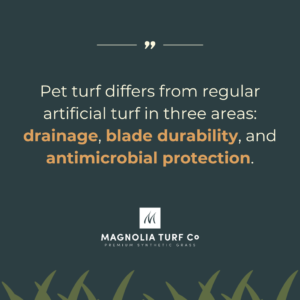
Pet turf differs from regular artificial turf in three areas: drainage, blade durability, and antimicrobial protection.
The right pet turf system uses Triflow Backing (drains 900+ inches of liquid per hour), C8 polymer blades that resist matting, and OptiFILL+ infill infused with Microguard® antimicrobial protection. All three have to work together on a properly built sub-base, or pet odor and turf wear show up within months.
How Microguard Technology Works on Pet Turf
Microguard is an antimicrobial treatment built into our pet turf at the manufacturing level. The turf blades carry it, and the OptiFILL+ infill is infused with it.
The point of Microguard is to fight bacteria. When dogs urinate on turf, the urine contains organic compounds that bacteria love to feed on. As the bacteria break it down, they release ammonia, which produces the strong, lingering pet odor that makes regular turf unbearable for dog owners.
Microguard works around the clock to inhibit that bacterial growth. Less bacteria means less ammonia, which means less smell.
The treatment is bonded into the turf fiber and the infill granules at manufacturing, which keeps it working through years of foot traffic, urine, and rain. The Microguard layer is one part of the system, and it works best when paired with the right drainage and the right blade structure underneath.
Why Drainage Is the First Line of Defense for Pet Turf
The fastest way to get pet odor under control isn’t antimicrobial treatment. It’s drainage.
Dog urine that drains through the turf and into the sub-base never has time to feed bacteria on the surface, while urine that lingers has all the time in the world. The first question for any pet turf system is how fast water moves through it.
Most artificial turf uses a traditional hole-punched backing that drains around 30 to 35 inches of liquid per hour. Our Triflow Backing drains 900+ inches of liquid per hour, which is the difference between a yard you can walk in and a yard you can’t.
Underneath the turf, the sub-base has to drain, too. We use three to four inches of decomposed granite or crushed limestone, compacted with a plate compactor. Crushed concrete, which some installers use to save money, hardens into a slab and traps urine.
Why the Blade Polymer Matters for Pet Turf
Drainage solves smell. Blade durability solves wear.
Dogs are tough on turf. They run, they dig, they roll, and they stop and start with claws on the surface.
Cheaper turf uses C4 or C6 polymer blades that can’t take that kind of foot traffic. After a year or two, the blades mat down and the yard starts looking like a worn carpet.
Our pet turf uses C8 polymer blades, the most durable structure available. They stand up to repeated foot traffic from dogs, kids, and outdoor furniture without matting.
We also deluster the blades during manufacturing so they don’t shimmer in the Texas sun. Cheaper turf often looks plasticky outdoors, especially in direct sunlight. Delustered blades read as natural grass even up close.
Why Standard Silica Sand Fails for Pet Turf
Most artificial turf is filled with silica sand. It works fine for non-pet installations, but for dogs it’s a problem.
Silica sand absorbs liquids, including urine. Once it’s been peed on enough times, it holds odor and won’t release it without replacement. Even with great drainage, the infill itself becomes a smell source over time.
We use OptiFILL+ on pet turf projects instead, a round acrylic-coated sand infused with Microguard. The acrylic coating keeps it from absorbing liquid the way silica does, and the Microguard infusion stops bacteria from taking hold. It costs more upfront and pays for itself the first hot summer.
When Pet Turf Goes Wrong
We get calls all the time from homeowners with failing pet turf installs from other companies. The problems trace back to one of three causes, and usually two or three at once.
The first is smell that won’t go away. This is almost always a drainage problem, made worse by silica sand infill that’s absorbed years of urine.
The second is matted blades. The turf uses a C4 or C6 polymer that gave up under foot traffic from the family’s dogs, and replacement is the only fix at that point.
The third is algae or mold on the turf. Standing water from poor drainage creates the right environment, and Microguard alone can’t fix what bad drainage causes.
The fix in every case is to tear it out and rebuild it right: sub-base, drainage, blade polymer, antimicrobial treatment.
Questions to Ask Before Hiring a Pet Turf Installer
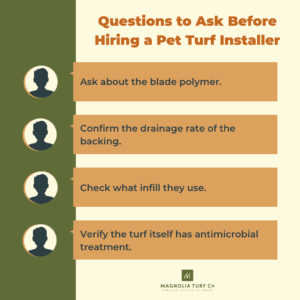
If you’re shopping for pet turf, the questions you ask installers will tell you whether they can do the job right:
- Ask about the blade polymer. The right answer is C8, since C4 or C6 won’t hold up.
- Confirm the drainage rate of the backing. You want at least 500 inches of liquid per hour. A rate around 30–35 inches of liquid per hour is standard turf, not pet turf.
- Check what infill they use. The answer should be OptiFILL+ or another Microguard-coated infill, since standard silica sand isn’t built for pets.
- Verify the turf itself has antimicrobial treatment. Microguard or an equivalent should be coated onto the blades during manufacturing.
If the answer to any of those is unclear, the installer isn’t equipped to do pet turf properly.
Frequently Asked Questions About Pet Turf
What is Microguard pet turf?
Microguard is an antimicrobial treatment built into the turf blades and infill at the manufacturing level. It inhibits the bacteria that break down dog urine and produce ammonia smell, working around the clock to keep pet turf odor-free.
Will artificial turf smell with dogs?
It depends on the system. Standard turf with a hole-punched backing and silica sand infill will smell within months of regular pet use. Pet turf with Triflow Backing, OptiFILL+, and Microguard treatment drains urine fast and prevents the bacterial growth that causes odor.
What’s the best artificial turf for dogs?
Look for three features: a C8 polymer blade for durability, a high-drainage backing rated at 500+ inches of liquid per hour (our Triflow Backing drains 900+ inches of liquid per hour), and an antimicrobial treatment like Microguard on both the turf and the infill.
Ready for Pet Turf Done Right?
We’ve installed pet turf for thousands of dog owners. Every project uses Triflow Backing, C8 polymer blades, Microguard antimicrobial treatment, and OptiFILL+ infill on a properly drained sub-base.
David Turner, our owner, personally oversees every installation, so the same standards apply whether you’ve got one dog or five. Every install is backed by our industry-leading 15-year warranty, which means if drainage fails, blades mat, or seams pull in that window, we make it right at no cost to you.
If you’ve got dogs and you’re tired of mud, smell, or torn-up grass, get a free pet turf quote.