Most dogs learn how to use artificial grass within one to two weeks. Take your dog to the same spot after meals and naps, reward them the moment they go, and place a small amount of their scent on the new surface to speed things up.
How to Train a Dog to Use Artificial Grass: Quick Answer
Dogs already know how to use artificial grass. The work is teaching them where the new spot is, not how to use it.
Stick to a routine, reward immediately, and keep the area clean. Most dogs adapt within seven to fourteen days.
Why Dogs Learn How to Use Artificial Grass Quickly
Artificial grass looks and feels close enough to real grass that most dogs accept it without much fuss. Puppies are easiest. Older dogs take a little longer.
Your routine matters more than the surface itself.
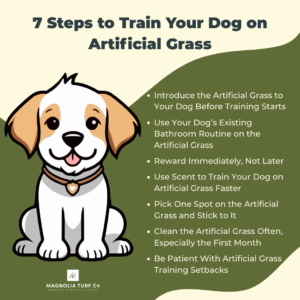
Step One: Introduce the Artificial Grass to Your Dog Before Training Starts
Before your dog needs to go, let them walk on, sniff, and lie down on the new grass. Bring treats.
If you’re installing pet turf in stages, this is easy. If your whole yard switched overnight, give your dog a day or two to explore.
Step Two: Use Your Dog’s Existing Bathroom Routine on the Artificial Grass
Dogs already go at predictable times: first thing in the morning, after meals, after naps, and before bed. Don’t change the schedule. Change the destination.
Walk your dog to the artificial grass at each of these moments. Use the same spot, same path, and same words (“go potty,” “outside,” whatever you already use).
Step Three: Reward Immediately, Not Later
A treat handed over five minutes later won’t register. The reward needs to land within three seconds, while your dog is still standing on the artificial turf.
Keep small treats in your pocket the first week. Praise them out loud. Don’t wait until you’re back inside.
Step Four: Use Scent to Train Your Dog on Artificial Grass Faster
Dogs return to spots that smell like a bathroom. Place a small amount of urine or solid waste on the new artificial turf the first day or two, or use a potty-training spray from a pet store.
Step Five: Pick One Spot on the Artificial Grass and Stick to It
Designate a single artificial grass area for bathroom use, especially if you have a large yard. A 50–100-square-foot patch in a back corner makes cleanup easier.
Step Six: Clean the Artificial Grass Often, Especially the First Month
Dogs prefer to go where it doesn’t already stink. Pick up solid waste daily and rinse the spot two to three times a week.
Our pet turf does the heavy lifting between rinses: our Microguard® antimicrobial coating cuts bacteria by 99% so odor doesn’t push your dog elsewhere, and our Triflow Backing clears urine in seconds before it can pool or absorb.
For deeper cleans, review our guide on how to clean pet turf.
Step Seven: Be Patient With Artificial Grass Training Setbacks
Most dogs are fully trained in seven to 14 days. Older dogs or rescues with anxiety may take three to four weeks.
Accidents on the patio or carpet mean the routine needs tightening: more frequent trips, faster rewards, more time on the turf. Don’t punish; redirect to the right spot.
If artificial grass training stalls past a month, the turf isn’t the problem. Talk to a trainer.
Real Grass vs. Artificial Grass for Training: What Changes
| Factor | Natural Grass | Artificial Grass |
| Cleanup | Mud, dead spots, mowing around waste | Hose rinse, no dead patches |
| Smell control | Depends on weather and drainage | Microguard® coating + Triflow drainage |
| Drying time after rain | Hours to days | Minutes |
| Damage from urine | Brown spots within days | None |
| Year-round usability | Limited in heat or rain | Works in any weather |
Why Magnolia Turf’s Pet Turf Makes Training Easier
Cheap pet turf works against you. Backing holds urine, infill traps odor, and dogs find fresher spots elsewhere. Our artificial pet turf prevents that.
Our Triflow Backing system drains 900+ inches of liquid per hour over a four-inch crushed granite base, so urine clears before it can soak in and the surface stays firm under digging and zoomies.
Microguard® antimicrobial coating cuts bacteria by 99% to stop your yard from developing the persistent kennel smell that breaks training, and OptiFILL+, one of our pet-safe infill options, neutralizes ammonia between cleanings so the yard still smells fresh by the end of a hot week.
Every blade is PFAS-free and 100% lead-free, so dogs that lick or chew the turf aren’t exposed to forever chemicals or heavy metals. Each install carries a 15-year warranty, so if seams separate or wear shows up at year seven or 10, replacement is on us, not on you. Our owner, David Turner, personally oversees every project, so the person who built the company is the one accountable for your yard, not a rotating crew of subcontractors.
We’ve completed 10,000+ installs across Dallas, Houston, Austin, San Antonio, Tampa, and Sarasota, so we’ve already solved the heat, humidity, and drainage issues your yard will throw at us.
Get a free estimate today and see what pet turf would cost in your yard.
How to Train a Dog to Use Artificial Grass: Frequently Asked Questions
How long does it take to train a dog to use artificial grass?
Most dogs learn how to use artificial grass within seven to 14 days. Puppies and dogs already trained on grass usually take less time. Older dogs or rescues may need three to four weeks of consistent routine.
Do I need a special potty patch, or can I use the whole yard?
A designated 50–100-square-foot patch in a back corner works well for cleanup and consistency. Dogs trained to a specific spot tend to use it long-term, even with the whole yard available.
Will artificial grass smell from dog urine?
Not with proper drainage and antimicrobial coating. Triflow Backing moves urine through within seconds, Microguard® coating reduces odor-causing bacteria, and a weekly hose rinse handles the rest.
Is artificial grass safe for dogs to use as a bathroom?
Yes. Our pet turf is PFAS-free, 100% lead-free, and non-toxic, so dogs can lick, chew, and lie on it without exposure to harmful chemicals. They can use it daily for bathroom breaks without health concerns.
How much does pet turf cost in Texas and Florida?
Pet turf installations run $9–$12 per square foot installed, including base prep, antimicrobial turf, and pet-friendly OptiFILL+ infill. A typical 1,500-square-foot yard costs $13,500–$18,000. See our full breakdown of pet turf costs for details.
Is it harder to train an older dog than a puppy?
Slightly harder, yes. Puppies haven’t built strong habits anywhere yet, so they accept the new spot quickly. Adult dogs already have a learned bathroom routine you’re asking them to update, so add an extra week to your timeline (two to three weeks for rescues with anxiety).
Start Teaching Your Dog How to Use Artificial Grass
Pet turf gives you a clean, mud-free yard with no brown urine spots.
Our pet turf for dog owners is built around what makes training stick: Triflow Backing that clears urine in seconds, Microguard® coating that prevents odor buildup, OptiFILL+ that neutralizes ammonia, and a 15-year warranty covering replacement long after cheaper turf fails.