Most buildings in Texas and Florida waste thousands of dollars on water and energy because designers focus on upfront costs rather than long-term efficiency.
Five proven changes cut waste and save money in the long run: low-flow plumbing, smart technology, solar panels, green cleaning products, and artificial turf. These upgrades pay for themselves through lower operating costs while helping the environment.
Quick Answer
Five upgrades that cut waste:
- Low-flow plumbing reduces water consumption.
- Smart HVAC and lighting controls cut energy waste.
- Solar panels generate free power after paying for themselves.
- Green cleaning products stop toxins from entering waterways.
- Artificial turf eliminates thousands of gallons of annual water waste while cutting maintenance from 100–150 hours yearly to just 5–10 hours.
What it costs: Each upgrade has different payback periods. Artificial turf typically pays for itself within five to seven years through water and maintenance savings alone. Get a free estimate to learn what artificial turf would cost for your property.
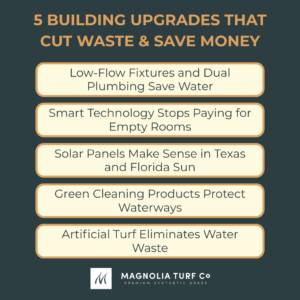
1. Low-Flow Fixtures and Dual Plumbing Save Water
Start with water. Low-flow plumbing fixtures reduce water usage across toilets, faucets, and sinks without sacrificing performance. The water savings add up fast when you multiply daily use across employees or family members.
Dual plumbing separates potable water from non-potable. Use clean water for drinking and washing. Use recycled water for toilets and irrigation. Commercial buildings in Dallas or Houston see substantial water savings within a few years.
Touch-free faucets eliminate the “someone left it running” problem with a simple fix that prevents waste.
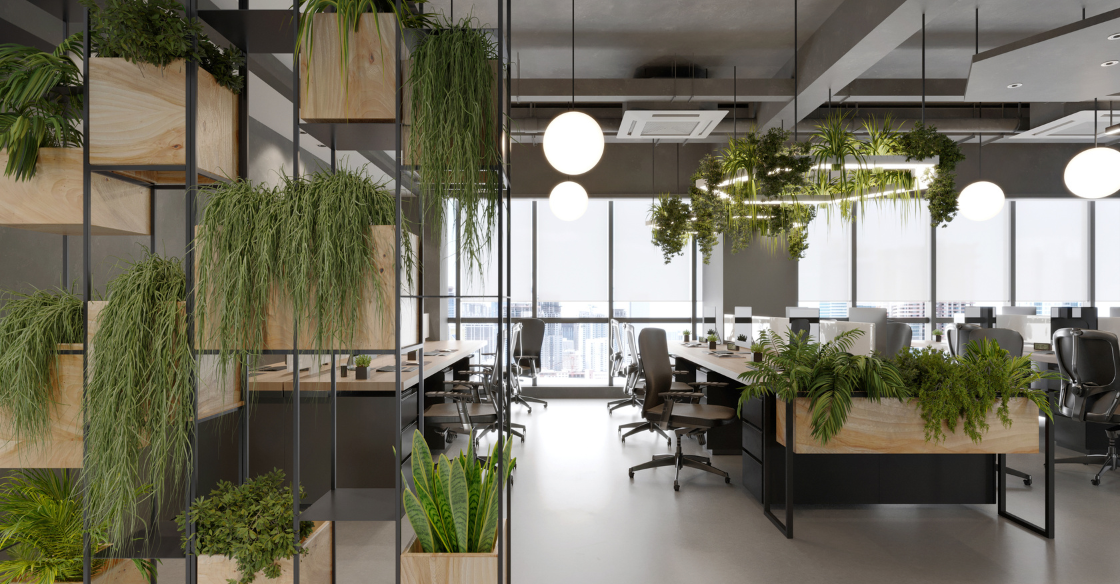
2. Smart Technology Stops Paying for Empty Rooms
Smart thermostats let you control HVAC by schedule and location. Why cool empty conference rooms at 3 a.m.? Program your system to match actual usage.
Motion sensors turn lights off when rooms are empty. Smart controls dim lights based on natural sunlight. Buildings in Texas and Florida have slashed lighting costs just by installing occupancy sensors.
Energy-efficient appliances complete the picture. They cost more upfront and save money every month after that.
3. Solar Panels Make Sense in Texas and Florida Sun
Both states get enough sunshine to make solar worth considering. Yes, upfront installation costs are hefty, but the electricity savings mean most systems eventually pay for themselves. After that, you’re generating free power for 20+ years.
For commercial properties, solar shows tenants you’re serious about sustainability. For residential properties, solar increases home value and cuts monthly bills. Get actual quotes and run real numbers for your specific situation.
4. Green Cleaning Products Protect Waterways
Commercial janitorial companies use harsh chemicals because they clean fast and cost less. Those chemicals go straight into storm drains and waterways. Phosphates, ammonia, and bleach all end up in creeks and rivers.
Green cleaning products work just as well without poisoning the water supply. They cost slightly more, but keeping toxins out of the environment is worth it.
5. Artificial Turf Eliminates Water Waste
Traditional landscaping needs constant irrigation. Properties in Texas and Florida use thousands of gallons of water each year just to keep grass alive. Then add the maintenance: Natural grass requires 100–150 hours yearly of mowing, fertilizing, and treatments with gas-powered equipment. All of it costs money and harms the environment.
Artificial turf fixes all that. We would know: After 15 years, we’ve installed over 10,000 lawns, and we hear from happy customers every day.
Why Commercial Properties Choose Artificial Turf
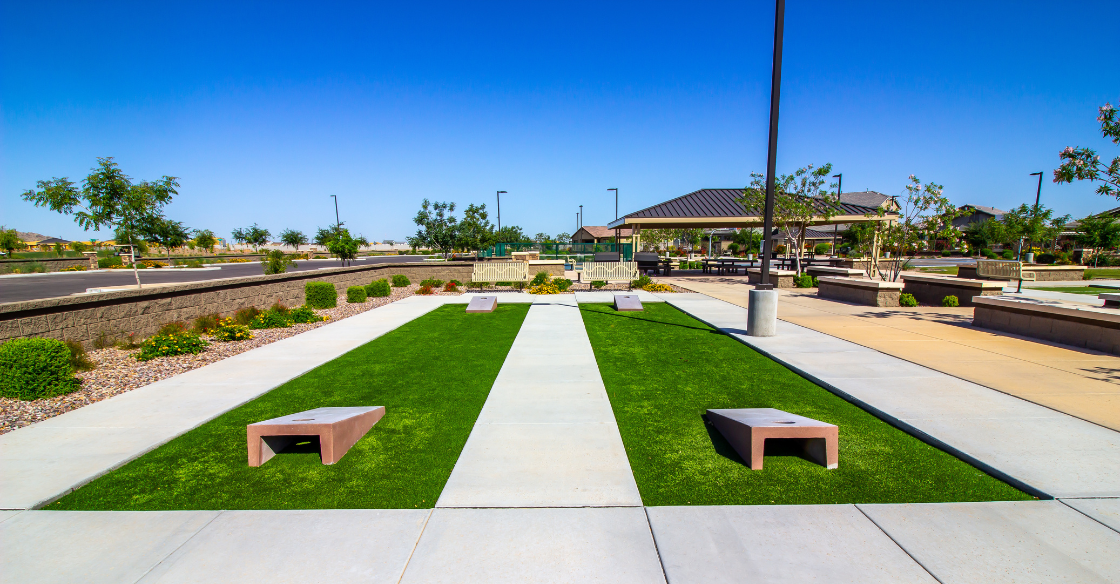
Office buildings with courtyards spend thousands of dollars each year maintaining natural grass. With artificial turf, maintenance drops to occasional cleaning.
Apartment complexes have it worse. Heavy foot traffic kills natural grass and creates mud patches that tenants track into units. Our flow-through backing drains at 30+ inches of water per hour, which means no mud and no puddles.
Daycare centers, too, need outdoor space that stays clean and safe. Artificial turf is a consistent surface that drains immediately and stays level. Kids can play outside year-round.
Installation That Matters
Most turf installations fail because of shortcuts in the base. Every installation we do starts with four inches of crushed granite or limestone, graded for drainage and compacted properly. That base prevents settling, never creates puddles, and keeps your turf looking perfect for 15 years.
We coat every installation with Microban® antimicrobial technology, which reduces bacteria by 99% without chemicals. For commercial properties with heavy use or residential yards with pets, that means cleaner, safer outdoor space. All our turf is PFAS-free and lead-free, because your health is non-negotiable.
Real Impact: Time and Water Savings
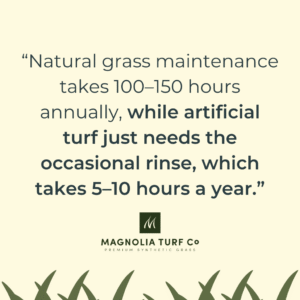
Natural grass maintenance takes 100–150 hours annually, while artificial turf just needs the occasional rinse, which takes 5–10 hours a year. You’re eliminating thousands of gallons of water consumption annually while getting back 140+ hours of your time.
Most homeowners recoup their investment within five to seven years thanks to water and maintenance savings. We guarantee our work will last at least 15 years. With normal use, your turf can last up to 20 years.
Contact us for a free estimate to see what this looks like for your property.
Texas Heat and Florida Rain
Texas heat is brutal. Artificial turf stays green through extreme heat, while natural grass turns brown despite constant watering. Light-colored turf with proper infill stays 20–40°F cooler than dark turf, making it more comfortable than asphalt or concrete.
Florida humidity and rainfall create different problems. Our installations handle Florida rainfall without compromise. The four-inch crushed granite base and flow-through backing drain water faster than storms can deliver it. Your outdoor space stays usable year-round, even during hurricane season.
Frequently Asked Questions About Eco-Friendly Building Design
Will artificial turf actually save money on a commercial property?
Yes. Most commercial properties recoup installation costs within five to seven years through eliminated water bills and maintenance expenses. After that, you save money while the turf lasts.
Does artificial turf work in places with heavy foot traffic?
That’s what it’s designed for. Commercial-grade turf handles constant use better than natural grass. Office courtyards, apartment common areas, and retail spaces all work fine with proper installation.
Can you install artificial turf around pools or water features?
Absolutely. Turf around pools works better than natural grass. It doesn’t get muddy, drains instantly, and provides slip resistance.
How long does commercial artificial turf really last?
Our installations come with 15-year warranties. With proper base work and quality materials, expect 15–20 years of use. Meanwhile, natural grass in commercial applications needs constant maintenance and periodic renovation.
Will HOAs or building codes have problems with artificial turf?
Most don’t anymore, especially as water conservation becomes increasingly important. Many Texas and Florida cities offer rebates for installing artificial turf. Check your specific HOA rules.
Does artificial turf actually help the environment or just save money?
Both. You’re eliminating thousands of gallons of water waste yearly, removing gas-powered lawn equipment that pollutes the air, and stopping fertilizer and pesticide runoff into waterways.
What maintenance does artificial turf need on commercial properties?
Rinse it monthly to remove debris. For high-traffic areas, maybe twice monthly. That’s 5–10 hours per year versus 100–150 hours per year spent maintaining natural grass.
Eco-Friendly Outdoor Spaces That Work
We’ve completed 10,000+ installations across Texas and Florida. Every one used a four-inch crushed granite base, flow-through backing that drains 30+ inches per hour, and Microban coating that reduces bacteria by 99%. All our materials are PFAS-free and lead-free.
Artificial turf eliminates thousands of gallons of water waste annually. It reduces maintenance from 100–150 hours per year to just 5–10 hours. The installations typically pay for themselves within five to seven years through water and maintenance savings, then keep saving money for another 10–15 years.
Contact us for a free estimate, and we’ll share real numbers based on your specific situation.