Most fake grass installations fail at a level you never see: the base.
We’ve repaired hundreds of failing fake grass installations across Texas. Almost every time, the problem isn’t the turf itself but what’s underneath… or more accurately, what’s not underneath.
Proper base preparation means three to four inches of crushed granite or limestone, compacted correctly. This base provides drainage and stability, and it keeps your turf looking great for 15 years instead of five.
It also adds about $3 per square foot to the fake grass installation cost. That’s why so many installers skip it.
After 10,000+ fake grass installations in Dallas, Houston, Austin, and San Antonio, we know what separates high-quality work from shortcuts. Today, we’ll show you the difference.
Fake Grass Installation: The Most Important Factor
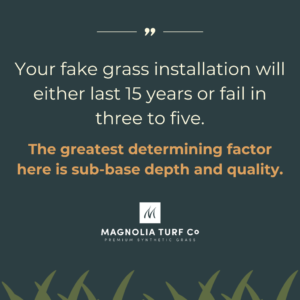
Your fake grass installation will either last 15 years or fail in three to five. The greatest determining factor here is sub-base depth and quality.
We see it all the time: installers who take shortcuts use two to three inches of sub-base, or worse, a weaker product that doesn’t compact properly. Sometimes, they skip it entirely.
The fake grass looks great at first, but six months later, you’ll see settling. Three years in, you’re looking at replacement.
When we install fake grass, we start with four inches of compacted decomposed granite and limestone on every single project. No exceptions.
That base prevents settling over time. It keeps your turf level and stable under Texas heat, heavy rain, and daily use. You don’t see or think about that sub-base after installation, but it’s the difference between a lawn that holds up over time and one that needs replacing in a few years.
Another factor many fake grass installers skip is infill sand. You need two to three pounds per square foot to keep the blades standing upright. Without enough infill, foot traffic from kids or dogs will mat the blades down over time. After three or four years, your turf looks like carpet: flat, worn out, and in need of replacing.
High-quality synthetic grass installation gets both right: the sub-base you never see and the infill that keeps blades upright. Skip either one, and you’re buying short-term fake grass at a long-term price.
How to Spot a Bad Fake Grass Installation
The most obvious sign of a poor fake grass installation is visible seams. If you can clearly see where two pieces of turf meet, the installer didn’t take time to seam it properly. Professional seaming demands skill and attention to detail.
Grade imperfections tell you the sub-base work wasn’t done right. Look for uneven spots, low areas where water might pool, or places where the fake grass doesn’t sit flat. These problems get worse over time as the inadequate base settles or moves.
For putting greens, there’s a simple test: roll a ball across the surface. If it doesn’t roll consistently or veers off its path, the sub-base wasn’t installed correctly.
A properly prepared base is perfectly level with the right grade. The ball should roll true.
A project we recently repaired in Dallas is a perfect example of what happens when fake grass installers take shortcuts. Initially, the homeowner had gone with a different fake grass installer, then called us for repairs.
When we evaluated the job, the problems were obvious: The fake grass installer had used about one inch of sub-base. It wasn’t level at all. You could see every seam. The turf was already wrinkling from insufficient infill.
We had to rip everything out and start over. We redid the sub-base completely and reinstalled new turf. The homeowner learned his lesson: Not all fake grass installations are equal. The cheap quote costs more in the long run when you factor in replacement.
When DIY Fake Grass Installation Makes Sense (And When It Doesn’t)
We get asked about DIY turf installation regularly. The honest answer is that it depends on your project.
For small, simple fake grass installations, DIY can work well. Patios and balconies are actually pretty easy. Rooftop installations work, too.
When you’re working with a pre-prepared concrete surface where you just need to glue the turf down, you don’t need specialized skills or heavy equipment. If you’re covering 100–200 square feet of concrete, you can probably handle it yourself and save some money.
Backyard installations over 500 square feet, however, demand professionals.
Cutting and seaming artificial turf takes real skill. You need to know how to trim precisely, how to join pieces so they’re invisible, and how to secure edges properly. You can’t pick up that skill from a YouTube video.
The other challenge is labor. A typical 1,500-square-foot backyard takes our five-man crew about three days. If you’re trying to do it with a friend on weekends, you’re looking at months of work.
Excavation alone is exhausting. Then you’ve got to grade and compact the sub-base correctly. One mistake compromises your entire fake grass installation.
Base preparation is where most DIY projects fail. Without proper compaction equipment and experience, you’re just guessing. One wrong guess leads to settling, drainage problems, and a shorter lifespan.
If your fake grass installation involves large square footage, slopes, drainage concerns, or areas where you need professional-grade results, hire someone who does this for a living. The $3,000–5,000 you might save doing it yourself isn’t worth much if your fake grass installation fails in three years.
What a High-Quality Fake Grass Installation Looks Like
When you hire Magnolia Turf for a fake grass installation, here’s what happens.
We confirm the exact installation date. Our crew arrives between 8 and 9 a.m. For a typical 1,500-square-foot project, plan on three days from start to finish.
You’ll have a five-man crew on site with a project manager overseeing the entire installation. The salesperson who sold you the project will be there the morning of the first day to answer any questions you may have.
Day one typically involves site preparation and excavation. We remove existing grass, grade the area properly, and begin base work.
Day two focuses on completing the base layer, with proper compaction and drainage.
Day three is turf installation, seaming, infill application, and finishing work.
Throughout the process, we protect your property. Our crews clean up as they go. They don’t cut corners or rush through the steps that protect your investment.
On the final day, we do a complete walkthrough with you. We want to make sure you’re 100% satisfied with your fake grass installation before we consider the job done.
That’s not customer service; that’s accountability. When the owner’s name is on every project, you don’t leave until it’s right.
We use premium turf with advanced features: flow-through backing that drains 900 inches of liquid per hour instead of the typical 30–100, antimicrobial coating that keeps your fake grass clean, and reinforced blade technology with W-, S-, and C-shaped blades that bounce back after heavy foot traffic. All our products are PFAS-free, because your family’s health matters.
About 50% of your project cost is skilled installation work from crews who know what they’re doing and have done this thousands of times without taking shortcuts. That expertise determines how your turf looks and performs over the next 15 years.
Why Texas Requires Better Fake Grass Installation Standards
Texas’s unique challenges make proper fake grass installation even more important.
The heat is intense. Dallas, Austin, Houston, and San Antonio all deal with scorching summers. In direct sunlight, lower-quality turf fades, and the surface can expand if the base isn’t properly prepared.
Our UV-resistant turf is manufactured for these conditions. LusterGuard technology minimizes the plastic-like sheen some turf gets in direct sunlight. Our heat-resistant materials stay comfortable after a quick rinse with a hose.
Then, there’s the rain. Texas weather is inconsistent, with periods of drought followed by heavy rainfall. Natural lawns become muddy, unusable messes after storms.
That’s why our advanced drainage systems matter. Standard turf uses hole-punched backing, and water drains slowly. Our flow-through backing is 100% permeable and drains 900 inches per hour. When heavy rain hits, the water moves through your fake grass immediately.
You don’t have to deal with pooling or standing water. Your lawn is dry and usable within minutes.
Our installation process includes laying a sub-base of gravel or decomposed granite, both chosen specifically for Texas conditions. This base layer works with our flow-through backing to filter water through quickly. For pet owners, this means urine drains completely instead of pooling and creating odor problems.
Questions to Ask Before You Hire a Synthetic Turf Installer
If you’re comparing quotes from multiple fake grass installers, here’s what you need to ask:
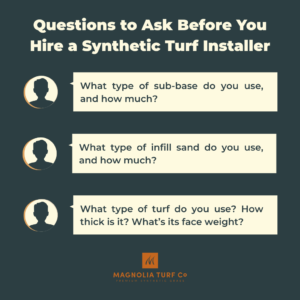
- What type of sub-base do you use, and how much? The answer should be three to four inches of decomposed granite or crushed limestone, compacted properly. If they say two inches or don’t mention compaction, move on to another installer.
- What type of infill sand do you use, and how much? Two to three pounds per square foot keeps blades upright and provides proper weight.
- What type of turf do you use? How thick is it? What’s its face weight? These specs matter for durability and appearance. Higher face weight means denser, more resilient turf.
These questions help you compare quotes apples to apples. When fake grass installers give you honest answers, you can make an informed decision based on differences in materials and process. When they’re vague or brush off questions, that’s a red flag.
Beyond materials, ask about the warranty. Our 15-year product warranty covers fading, manufacturing defects, and balding. If settling, wrinkles, uneven spots, or lifted edges show up, we’ll come back and fix it. Other fake installers offer shorter warranties or only cover the product, not the installation.
Ask how long the company has been in business and how many installations they’ve completed. We’ve done over 10,000 since we started. That experience matters when you’re working with challenging site conditions.
Finally, ask yourself if they answer their phone. It may sound silly, but accessibility matters. When you have questions or concerns, you want to reach someone who’ll help, not get sent to voicemail repeatedly.
Important Takeaways for Your Fake Grass Installation
When it comes to fake grass installation, here’s what matters most:
- Sub-base quality determines longevity more than turf quality. Four inches of compacted decomposed granite isn’t optional.
- Proper infill amount (two to three pounds per square foot) keeps blades upright for 15 years.
- Visible seams and grade imperfections are red flags that indicate poor workmanship.
- DIY makes sense for small concrete surfaces. It doesn’t make sense for backyards over 500 square feet that require excavation and seaming.
- Professional turf installation costs more upfront but delivers long-term value through quality materials and skilled labor.
- Texas heat and rain require strong drainage systems and UV-resistant materials designed for the climate.
- Ask specific questions about sub-base type, depth, infill amount, and turf specifications to compare quotes accurately.
Frequently Asked Questions About Fake Grass Installation
How long does a professional fake grass installation take?
A typical 1,500-square-foot residential project takes about three days from start to finish with a professional crew. Smaller projects can be completed in one to two days.
Complex installations with slopes, drainage challenges, or custom features may take longer. DIY projects for the same size area can take weeks if you only work weekends.
What’s the difference between cheap fake grass installations and high-quality fake grass installations?
Budget installations often use two inches of sub-base or skip it entirely, rely on basic turf without advanced features, and employ less experienced crews.
Quality installations use four inches of compacted base, premium turf with flow-through backing and antimicrobial coating, reinforced blade technology, and skilled installers who don’t take shortcuts.
Can fake grass handle Texas heat and heavy rain?
Yes, when it’s installed correctly with appropriate materials. UV-resistant turf prevents fading in intense sun. Heat-resistant materials stay comfortable. Flow-through backing that drains 900 inches per hour handles heavy Texas rain events without pooling.
Choose products designed for the climate, and make sure your fake grass installation includes proper base preparation for drainage and stability.
How do I know if my fake grass installation is failing?
Watch for wrinkling or bunching of the turf surface, which indicates base settling or improper fake grass installation.
Lifted edges or separating seams are problems that get worse if ignored. Uneven patches or low spots where water pools and standing water that doesn’t drain within minutes after rain are all signs of installation quality issues, usually related to inadequate base work or poor seaming.
Is PFAS-free fake grass really necessary?
PFAS are “forever chemicals” that researchers have found in some fake grass products. These chemicals can harm both the environment and your family’s health.
Quality manufacturers offer independently tested, 100% PFAS-free products.
Ready for a Fake Grass Installation That Actually Lasts?
The difference between fake grass that lasts 15 years and fake grass that fails in three comes down to installation quality: proper sub-base preparation, adequate infill, skilled seaming, and materials designed for Texas conditions.
We’ve completed over 10,000 fake grass installations across Dallas, Houston, Austin, and San Antonio. Every one was completed with four inches of compacted base and premium materials featuring 900-inches-per-hour drainage.
We don’t take shortcuts. Ever.
If you’re ready to discuss your project, we’ll give you an honest assessment and quote. Give us a call or request a free estimate via our website.
We answer our phones. We show up when we say we will. And we stand behind our work with a 15-year warranty and thousands of satisfied customers.