You’ll see quotes ranging from $6 to $20 per square foot for an artificial turf installation. That’s a massive spread.
With such a wide range, “How much does turf cost?” isn’t the right question. “What am I actually getting at different price points?” is.
We’ve installed over 10,000 artificial turf projects across Texas and Florida. Every project starts with proper sub-base preparation (three to four inches of crushed granite or limestone, compacted right) and includes premium materials with features that make maintenance a breeze.
We don’t take shortcuts. Ever.
Here’s what artificial turf really costs, what drives those costs, and how to compare quotes without getting burned.
How Much Does Artificial Turf Cost in Texas?
Turnkey artificial turf installation costs $6 to $20 per square foot in Texas markets.
Magnolia Turf installations run $8 to $11 per square foot. That includes everything: removal of what’s there now, three to four inches of sub-base, weed fabric, premium turf, and the right infill for your situation.
A typical residential project is about 1,500 square feet. At $8 per square foot, that comes out to $12,000. It’s not the cheapest option out there, but it’s the one that lasts 15 years instead of five.
Your project’s size affects how much artificial turf costs. Larger installations cost less per square foot since material and labor efficiency improves at scale. A 3,000-square-foot project might run $8 per square foot, and a smaller 500-square-foot area might hit $11 per square foot.
The type of turf matters, too:
- Standard landscape turf sits in that $8 to $11 range.
- Pet-friendly turf costs more since it needs specialized drainage and antimicrobial infill.
- Putting greens are the most expensive at $14 to $15 per square foot, which includes custom design work and precision installation.
Why Do Artificial Turf Costs Vary So Much?
Companies that charge $6 per square foot are cutting corners.
The sub-base gets skipped or minimized. Maybe they use crushed concrete instead of limestone and decomposed granite, and concrete doesn’t drain well. Or, they’ll lay down just one to two inches of base material when proper installation needs three to four.
That thinner base means your turf will settle, wrinkle, and develop drainage problems within a couple of years.
The turf itself might be of lower quality. We measure turf thickness by face weight. Average market products run about 60 ounces. We won’t install anything under 60 ounces since it doesn’t look realistic.
Our products range from 60 to 90 ounces in face weight. Thicker turf costs more but lasts longer and looks better under foot traffic.
Blade shape matters. Premium turf uses W-shaped, S-shaped, and C-shaped blades with spine reinforcement. These engineered shapes bounce back after you step on them, and they stay upright and natural-looking.
Cheaper products use flat blades that mat down and stay flat. You’ll see the difference after three years, when our competitors’ turf looks worn and ours still looks fresh.
Backing technology affects both cost and performance. Standard turf uses hole-punched backing for drainage. Our turf uses flow-through backing that drains 900 inches per hour.
That’s not marketing talk. It’s the difference between water clearing fast and pooling on your lawn after a Texas thunderstorm. Flow-through backing costs more, but it prevents problems that cost even more to fix later.
Infill is another feature companies like to save money on. Basic silica sand runs cheaper. For areas that see pet traffic, you need OptiFILL+. These specialized infills drain better, control odor, and add about 30 cents per square foot.
Most companies use one to two pounds of infill per square foot, but we use two to three pounds. More infill means your turf stands up better and lasts longer.
Companies that charge $15 to $20 per square foot usually add marketing overhead and profit margin. They don’t necessarily have higher-quality products.
Meanwhile, we keep our pricing competitive by running our business efficiently. Ten years and 10,000 installations teach you how to work smart.
Comparing Artificial Turf Quotes: What Actually Matters
When you’re looking at three different quotes for artificial turf installation, you need to compare the right factors, not just the bottom line number.
Face weight tells you how thick the turf is. Ask every company what face weight they use. If they say under 60 ounces, or if they won’t tell you, walk away.
We use 60–90 ounce products. Anything less doesn’t hold up.
Sub-base depth and material determine how your turf performs long-term. Ask how many inches of base they’re installing and what material.
Crushed concrete is cheap and drains poorly. Limestone and decomposed granite cost more but compact well and drain properly. One or two inches isn’t enough. Four inches is the standard for installations that last.
Infill type and amount affect durability and appearance. Ask what kind of sand they’re using and how much. For dog owners, silica sand isn’t good enough. You need OptiFILL+ for proper drainage and odor control.
Ask how many pounds per square foot. Two to three pounds keeps your turf standing up, and one to two pounds is cutting corners.
Drainage systems separate quality installations from problems waiting to happen. Ask about the backing. Hole-punched backing is standard, but flow-through backing that drains 900 inches per hour is better.
In Texas, where heavy rain is followed by intense heat, drainage prevents mold, odor, and surface damage.
Warranty coverage reflects confidence in materials and installation. Our 15-year warranty covers fading, manufacturing defects, and balding. If the turf settles, wrinkles, develops uneven spots, or lifts at the edges, we come back and fix it.
Not all warranties cover installation issues. Make sure yours does.
How Texas Heat Affects Artificial Turf
Texas heat isn’t just uncomfortable. It’s brutal on outdoor surfaces. Artificial turf designed for this climate needs specific features.
UV resistance matters more here than in most places. Prolonged exposure to intense sun fades lower-quality turf.
Our products include UV inhibitors built into the yarn during manufacturing. That color retention lasts 15 years, not five. That’s the difference between turf that looks great and turf that looks washed out.
Heat-resistant materials minimize surface temperature. Modern turf technology uses materials that reflect heat rather than absorb it. You can rinse the surface with water to cool it further, but quality materials stay cooler to start with.
Drainage is important in Texas for two reasons:
- Heavy thunderstorms can dump inches of rain in only an hour.
- Then the heat returns, and the water needs somewhere to go.
Poor drainage leads to standing water, mold, and odor. Our flow-through backing, which drains 900 inches of liquid per hour, keeps your surface dry and usable even after storms.
Blade technology handles the UV and heat combination better. Our W-shaped, S-shaped, and C-shaped blades with spine reinforcement maintain their structure under intense sun and foot traffic.
Flat blades without reinforcement break down faster in harsh conditions, and Texas heat accelerates that breakdown.
Hidden Artificial Turf Costs to Watch For
Most artificial turf quotes cover the main installation, but a few factors might add to the final number.
Edging
Edging keeps your turf separate from your garden beds and prevents erosion between surfaces. Every installation needs some type of edge where turf meets soil, and different materials cost different amounts.
You don’t need edging where turf meets a patio or house foundation. Ask what’s included in the quote and what costs extra.
Infill Upgrades
Infill upgrades add costs but solve specific problems.
Basic silica sand comes standard. Pet owners need OptiFILL+ for drainage and odor control. That’s about 30 cents more per square foot, which is worth it if you have dogs but unnecessary if you don’t.
Site Prep
Site preparation varies by property. Most residential installations include the removal of existing grass and basic grading. Extensive grading for drainage, tree root removal, or irrigation system work might cost extra.
Ask during the estimate so there are no surprises.
Installation Quality
Installation quality determines long-term costs. Cheap installation means you’ll need to shell out money for repair costs down the road: weed growth through improperly installed turf, wrinkles and sinkholes from poor base compaction, and premature replacement when shortcuts lead to failure.
Those future costs dwarf any money you might save upfront.
For a free estimate and transparent pricing for your outdoor space transformation, contact us today.
Cost of Artificial Turf: What You’re Really Paying For
High-quality artificial turf installation costs more since it includes elements that matter for long-term performance.
Proper sub-base prep means three to four inches of crushed limestone or decomposed granite, graded for drainage and compacted in layers. This foundation keeps your turf flat, stable, and functional for 15 years. Skip this step and you’re replacing turf in five.
Premium materials include flow-through backing that drains 900 inches per hour, W-shaped, S-shaped, and C-shaped blades with spine reinforcement, UV inhibitors built into the yarn, and PFAS-free materials that keep your family safe from forever chemicals. These features cost more since they perform better and last longer.
Experienced installation crews mean the difference between a job done right and problems down the line. We’ve done 10,000 installations. Our crews know how to handle Texas soil conditions, grade for proper drainage, and stretch turf correctly. We don’t make the mistakes cheaper companies do.
A real warranty backs up the work. When we install your artificial turf, you’ll get a 15-year warranty that covers fading, defects, and balding.
That warranty means something since we’ve been here 10 years and we’ll be here in 10 more. Fly-by-night companies can’t make that promise.
Return on Your Artificial Turf Investment
In Texas, artificial turf typically pays for itself in five years or fewer.
Natural grass costs about $2,300 per year to maintain. That includes water, fertilizer, pesticides, equipment, and repairs. For a 1,200-square-foot lawn, artificial turf runs about $10,800 installed.
Year one, you spend more. Year two, you’re close to break-even. Year three and beyond, you’re saving money.
Water savings add up fast in Texas. Natural grass needs about one inch of water per week during growing season. That’s roughly 12,000 gallons per year for a typical lawn.
Artificial turf needs none, which saves you tons.
Maintenance time disappears, so you won’t have to mow, edge, fertilize, or deal with brown patches anymore. You won’t have equipment to maintain or replace, and you won’t spend weekend mornings on lawn care. That time is valuable, too.
Long-term durability matters for true ROI. When it’s installed right, artificial turf lasts 15 years or more. Turf installed cheaply fails in five to seven years and needs replacement. That replacement cost wipes out any initial savings.
High-quality installation costs more once, and poor installation costs more twice.
Takeaways for Texas Homeowners Considering Artificial Turf
Before you sign a contract, understand these points:
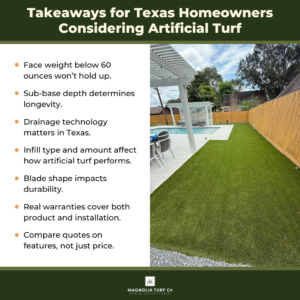
- Face weight below 60 ounces won’t hold up. Ask every company what face weight they’re using. Our range of 60–90 ounces delivers durability and appearance.
- Sub-base depth determines longevity. Four inches of proper material creates a stable, draining foundation, and two inches or less means future problems.
- Drainage technology matters in Texas. Flow-through backing that handles 900 inches per hour prevents water damage, mold, and odor. Standard hole-punched backing doesn’t cut it.
- Infill type and amount affect how artificial turf performs. Two to three pounds per square foot keeps blades standing. Pet owners need OptiFILL+ for proper drainage and odor control.
- Blade shape impacts durability. W-shaped, S-shaped, and C-shaped blades with spine reinforcement bounce back after foot traffic. Flat blades mat down and stay flat.
- Real warranties cover both product and installation. Fifteen years covering fading, defects, balding, and installation issues is the standard you should expect. Make sure your warranty includes installation problems, not just manufacturing defects.
- Compare quotes on features, not just price. The lowest number often means the most shortcuts, so know what you’re getting at each price point.
Frequently Asked Questions About Artificial Turf Cost
How much does artificial turf cost per square foot in Texas?
Professional installation ranges from $6 to $20 per square foot, depending on quality and company.
Magnolia Turf installations run $8 to $11 per square foot for residential projects, including proper sub-base preparation, premium materials, and a 15-year warranty. That’s turnkey pricing with no shortcuts.
What’s included in artificial turf installation cost?
Complete installation includes removal of existing grass, three to four inches of sub-base material (crushed limestone or decomposed granite), weed fabric, the turf itself, infill material, and final cleanup. Edge work, custom drainage, and premium pet infill may cost extra depending on your needs.
Is artificial turf worth the high upfront cost?
For most Texas homeowners, yes. The typical ROI timeline is five years or less. You save on water, fertilizer, pesticides, equipment, and maintenance time.
High-quality artificial turf lasts 15 years or more. Poor installation fails in five to seven years and needs replacement, which eliminates any savings.
How long does artificial turf last in the Texas heat?
High-quality artificial turf with proper UV inhibitors lasts 15 years or more in Texas. The intense sun and heat require better materials. Premium turf includes UV-resistant yarn, heat-reflective materials, and reinforced blade technology.
Lower-quality products fade and break down faster in harsh conditions.
What’s the difference between cheap and expensive artificial turf?
The difference shows up in sub-base depth, turf face weight, blade technology, backing system, and infill quality.
Cheap installations use thin bases, lighter turf, flat blades, hole-punched backing, and minimal infill. Premium installations use four-inch bases, 60–90 ounce face weight turf, engineered blade shapes, flow-through backing, and proper infill amounts.
Those differences determine whether your turf lasts five years or 15.
Making the Right Choice for Your Home
Artificial turf costs more upfront than most homeowners expect. The range from $6 to $20 per square foot makes comparison confusing, but that range exists for a reason. Different companies sell different products and different installation quality.
We’re at $8 to $11 per square foot since we install it right with proper sub-base, premium materials with features that perform in Texas conditions, experienced crews who know what they’re doing, and a 15-year warranty that covers what matters.
It’s not the cheapest option, but it’s the right one.
Get a free estimate to learn what high-quality installation costs for your property. We’ll explain exactly what you’re getting so you can make the best choice for your home.